Location: Gaoming District, Foshan, Guangdong, China

Modern Nursery Ideas: 7 Beautiful and Practical Design Tips

The most useful modern nursery ideas begin with everyday life: a comfortable place to feed, a clear path to the crib, and somewhere to find a clean change of clothes without searching through drawers.
A modern nursery can feel warm, personal and full of character. Simple furniture, a thoughtful color palette and a few well-chosen details can bring the room together without filling every corner.
Whether you are planning a dedicated nursery or making space for a baby in a smaller room, these seven design ideas offer a practical starting point.
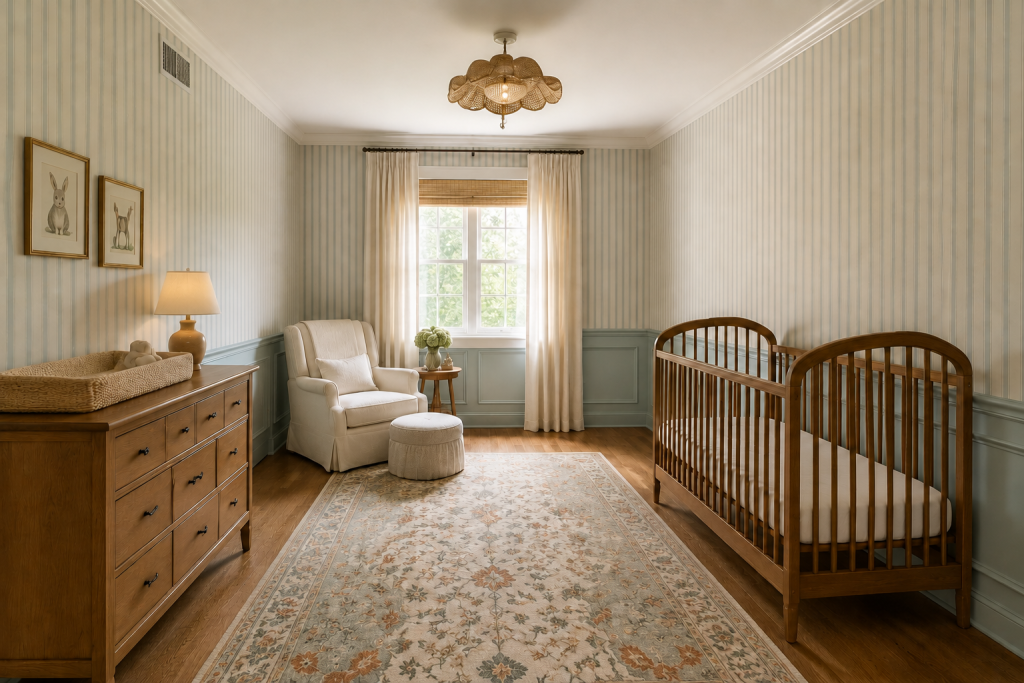
1. Build Your Modern Nursery Around a Warm Color Palette
Start with a small group of colors that work across the walls, furniture and textiles.
Warm white and light wood make a versatile base. For a little more color, consider muted green, dusty blue or a soft terracotta accent. Use these as design options rather than rules: the right combination depends on your room, natural light and personal taste.
Three combinations to explore are:
- Warm white, pale wood and sage green.
- Soft beige, cream upholstery and muted blue.
- Off-white, medium wood and small terracotta accents.
Try paint samples beside your chosen furniture finish before making a final decision. Look at them in daylight and under the lighting you expect to use in the evening.
Repeating an accent color in two or three places can help the room feel connected without requiring every item to match.
2. Choose Simple Furniture with a Clear Visual Role
A crib often becomes the visual starting point of a nursery. Choose its finish and proportions first, then consider how the other large pieces will sit alongside it.
For a modern nursery design, look for a balance between clean lines and softer shapes. A simple wooden crib might pair with an upholstered nursery chair, while a plain changing unit can leave room for more expressive artwork elsewhere.
Matching furniture sets are one option, but they are not essential. Pieces can work together through a shared wood tone, similar proportions or a repeated color.
Avoid choosing by appearance alone. Check dimensions, assembly instructions and the requirements that apply to each product.
Keep decorative styling outside the infant sleep space. The U.S. Consumer Product Safety Commission recommends a firm, flat sleep surface in an appropriate crib or other approved infant sleep product, with only a fitted sheet and no pillows, loose blankets or toys.
3. Create a Comfortable Feeding Corner
A feeding corner deserves as much planning as the crib.
Begin with the chair’s dimensions and the way it moves. A nursery glider, rocking chair and recliner may need different amounts of space around the base and backrest. Check the manufacturer’s clearance instructions rather than judging the fit from the chair’s upright position.
When comparing chairs, consider:
- Seat height and depth.
- Armrest position.
- Back support.
- Ease of sitting down and standing up.
- Upholstery care.
- Space needed for movement or reclining.
If possible, try the chair before choosing it. Comfort is personal, and the same seat will not suit every adult.
A small side table can provide a place for a drink or other adult essentials, provided it does not interfere with the chair’s movement or the walking route.
Keep the corner visually simple: a comfortable chair, useful lighting and a practical surface may be all it needs. The chair is for the caregiver; it does not replace the baby’s separate sleep space.
4. Make the Changing Area Easy to Use
Storage works best when it follows the task.
Plan the changing area around the items you use together: nappies, wipes, clean clothing and disposal supplies. Give frequently used items a clear place so that the surface does not become a collection of unrelated objects.
Closed drawers can keep spare supplies out of sight, while an accessible compartment can hold everyday essentials. Think about how you will open each drawer while standing at the changing unit.
A dresser should only be used for changing when it is designed for that purpose with the specified compatible components. Do not assume that placing a pad on an ordinary cabinet creates a suitable changing station.
Follow the product’s instructions for assembly, anchoring and use. Keep supplies accessible to the adult while maintaining supervision of the baby.
For the design itself, choose handles, finishes and storage containers that relate to the rest of the room. Practical furniture can be part of the overall look.
5. Use Small Modern Nursery Ideas to Protect Floor Space
In a small nursery, measure before adding more furniture.
Mark the footprint of the crib, chair and changing unit on a simple floor plan. Include door swings, open drawers and the operating space of a glider or recliner.
Then check the route between the entrance and each main area. A layout that looks spacious with everything closed may feel very different during everyday use.
Useful space-saving decisions include choosing:
- A chair that fits the room without blocking circulation.
- Storage sized for the supplies you actually need.
- Furniture with suitable built-in storage, where available.
- Fewer decorative pieces on the floor.
Do not reduce the room’s essential functions just to make it look minimal. The goal is enough furniture to support daily routines, with enough open space to use it comfortably.
6. Add Texture and Thoughtful Lighting
Texture can bring warmth to a simple room without adding more colors.
Consider the contrast between a visible wood grain, a woven curtain and an upholstered chair. Use decorative textiles outside the crib, and check cleaning requirements before choosing a fabric for an area likely to see frequent spills.
Lighting also deserves a separate plan. General lighting helps with cleaning and finding items, while a lower-intensity light may be more comfortable for quiet evening routines.
Test where the light falls. A fitting that looks attractive in a photograph may shine directly into the caregiver’s eyes when seated.
Plan cord placement and keep cords out of a child’s reach and away from the crib. Arrange rugs and other floor accessories so they do not obstruct the chair mechanism or create an awkward walking route.
7. Leave Room for the Nursery to Change
You do not need to plan every stage of childhood before decorating a nursery. It is still useful to consider which pieces may remain practical later.
A neutral storage unit may suit a future bedroom. A comfortable nursery chair might later become a reading chair, depending on its size and design. Wall colors can stay while artwork and smaller accessories change.
If you choose a convertible crib, check the actual conversion options, the parts required and the use limits for each configuration. Conversion kits may be sold separately, and not every crib converts in the same way.
For flexible styling, place more of the room’s theme in replaceable details rather than every large piece of furniture.
A few personal illustrations or a favorite color can give the nursery character while leaving the main furniture easy to coordinate in the future.
Modern Nursery Ideas: Frequently Asked Questions
What makes a nursery look modern?
A coordinated palette, simple furniture shapes and thoughtful placement can create a modern look. Warm materials and personal details help the room feel welcoming rather than bare.
Can a modern nursery be colorful?
Yes. Try a consistent base with a few stronger accents, or choose one colorful feature and let the surrounding furniture remain simple. Modern design does not require an all-white room.
How do I start planning a small nursery?
Measure the room and essential furniture first. Include clearance for doors, drawers and moving chairs before deciding where to add decorative pieces.
Do all nursery furniture pieces need to match?
No. A shared finish, color or design detail can connect different pieces. Check their scale together so one item does not overwhelm the room.
Bring the Room Together Around Everyday Life
The best modern nursery ideas are the ones that make sense in your home.
Start with the layout, choose furniture that fits, and build the colors and decorative details around those decisions. A clear route to the crib, a comfortable feeding chair and useful storage will matter long after the room’s first photograph.
For baby brands and retailers, the same approach can guide a coordinated nursery collection: show how the pieces work together in a real space, with accurate dimensions and clear product information.
Planning a nursery furniture collection?
Contact Tianfeng Baby to discuss nursery chairs, baby cribs and changing tables for your range. Share your target market, preferred finishes and product requirements to explore available models and OEM or ODM options.