Location: Gaoming District, Foshan, Guangdong, China

Do I Need a Nursery Chair? 7 Reasons Why Comfort Matters for New Moms

- A Practical Guide to Choosing the Right Nursing Chair for Your Baby’s Nursery
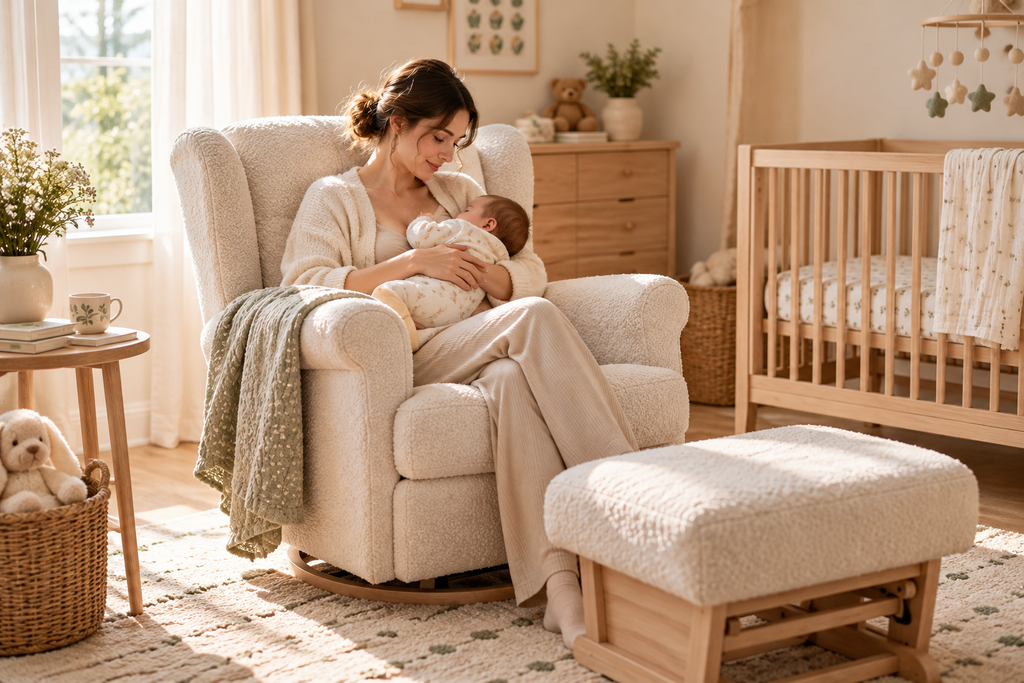
Do You Really Need a Nursery Chair?
Preparing for a new baby comes with countless decisions. From choosing a crib to organizing a changing station, parents often wonder which nursery essentials are truly necessary.
One question that frequently comes up is: “Do I need a nursery chair?”
The short answer is no, a dedicated nursery chair isn’t absolutely necessary, but a comfortable, supportive chair can make everyday feeding and soothing routines much easier.
Whether you’re breastfeeding, bottle-feeding, or simply spending quiet moments with your baby, having a comfortable place to sit can make a meaningful difference.
Unlike ordinary living room chairs, nursery gliders, rocking chairs, and recliners often include features designed to support parents during repeated feeding sessions.
However, not every nursery chair is created equal.
Seat width, armrest height, back support, upholstery, and movement mechanisms can all affect how comfortable and practical a chair feels.
In this guide, we’ll explore seven reasons why a comfortable nursery chair can be a worthwhile addition to your baby’s room, how to choose the right one, and what makes a well-designed nursing chair truly functional.
What Is a Nursery Chair?
A nursery chair is a seating option commonly used by parents and caregivers for feeding, soothing, reading, and spending time with babies.
While a regular armchair can serve the same purpose, nursery chairs often include features designed to improve comfort during everyday childcare routines.
The three most common types are:
Nursery Glider Chairs
A nursery glider moves smoothly along a guided mechanism, typically creating a gentle forward-and-backward motion.
Many parents appreciate gliders for their smooth movement and comfortable seating.
Some models also include matching ottomans or reclining functions.
Nursery Rocking Chairs
Traditional rocking chairs use curved rockers to create a gentle rocking motion.
They remain popular for their timeless appearance and familiar movement.
Modern upholstered rocking chairs combine traditional rocking functionality with padded seats and supportive backrests.
Nursery Recliners
Nursery recliners allow parents to adjust the backrest and, depending on the model, extend a footrest.
Some models also include gliding, swiveling, or powered reclining mechanisms.
These features may appeal to parents who want greater flexibility in their seating positions.
The best nursery chair isn’t necessarily the most expensive one. It’s the chair that fits your body, your available space, and your daily feeding routine.
7 Reasons Why a Comfortable Nursery Chair Matters
1. Better Comfort During Frequent Feeding Sessions
Newborn babies typically need to feed frequently throughout the day and night.
For parents, this can mean spending considerable time sitting while holding and feeding their babies.
Without adequate support, an uncomfortable seating position may contribute to neck, shoulder, arm, or back discomfort.
A well-designed nursery chair can provide a more supportive seating environment.
Important features include:
- A supportive backrest that allows parents to sit comfortably.
- Padded armrests that help support the arms while holding a baby.
- Appropriate seat depth and width.
- Comfortable cushioning that maintains its shape.
- A seat height that allows the user’s feet to rest securely on the floor.
These details may seem small, but they can make a noticeable difference during repeated feeding sessions.
Comfort Tip: When testing a nursery chair, try sitting in it while holding a pillow in the position you would normally hold your baby. This can help you evaluate the armrest height, seat width, and back support.
2. A Comfortable Space for Both Breastfeeding and Bottle-Feeding
One common misconception is that nursing chairs are designed exclusively for breastfeeding mothers.
In reality, nursery chairs can also be useful for parents who bottle-feed or combine different feeding methods.
Different feeding positions require different amounts of space and support.
For breastfeeding parents, comfortable arm positioning and adequate seating space can make it easier to adjust the baby’s position.
For bottle-feeding parents, sufficient seat width may allow more flexibility when holding the baby and positioning the bottle.
However, comfort should never replace safe feeding practices. Parents should continue following appropriate guidance on infant positioning and feeding.
Why Seat Width Matters More Than You Might Think
Seat width is an important but sometimes overlooked feature in nursery chair design.
A chair that feels comfortable when sitting alone may feel restrictive when holding a baby, using a nursing pillow, or changing feeding positions.
A wider seat can provide additional flexibility, although an excessively wide chair may make the armrests less useful for some parents.
The ideal dimensions depend on the user’s body size and feeding preferences.
A thoughtfully designed nursery chair should balance seating space with accessible arm support.
3. Gentle Rocking or Gliding Can Create a Calming Routine
Many parents find repetitive, gentle movement relaxing.
Rocking and gliding chairs provide controlled movement that can become part of a familiar feeding or soothing routine.
A nursery glider generally moves along a guided path, while a rocking chair moves through the curved motion of its rockers.
Both can offer a comfortable place for parents to sit while comforting their babies.
However, parents should remember that a nursery chair is not a safe infant sleeping surface.
If a baby falls asleep while being held, they should be transferred to an appropriate infant sleep space, following safe-sleep recommendations.
Parents should also avoid falling asleep while holding a baby in a chair, especially during nighttime feeding sessions.
A nursery chair can support a calming bedtime routine, but it should never replace a crib, bassinet, or other approved infant sleep surface.
4. More Comfort During Late-Night Feeding
Nighttime feeding is a normal part of caring for a newborn.
For many parents, getting out of bed several times during the night can be physically tiring.
A dedicated feeding chair provides a familiar place to sit, with feeding supplies conveniently located nearby.
Some parents prefer a nursery recliner because it allows them to adjust their seating position.
Others prefer a compact glider that fits comfortably beside the crib.
Regardless of the style, practical considerations include:
- Easy access to feeding supplies.
- Supportive seating.
- A stable chair structure.
- Sufficient space to stand up safely while holding a baby.
- A nearby light that provides visibility without excessive brightness.
For nighttime use, parents should choose a seating position that helps them remain awake and attentive.
Safety Reminder: Never use a reclined nursery chair as a place to sleep with your baby.
5. A Nursery Chair Can Support Different Stages of Parenthood
One concern parents often have is whether a nursery chair will still be useful after the breastfeeding stage.
Fortunately, many nursery chairs are designed for longer-term use.
During the newborn stage, they may serve as a comfortable place for feeding and soothing.
As babies grow, the same chair can become a place for reading picture books, cuddling, or spending quiet moments together.
Later, a well-designed nursery chair may even be moved into another room and used as an ordinary lounge chair.
This is particularly true for modern upholstered gliders and recliners that blend easily with contemporary home interiors.
For parents considering long-term value, neutral upholstery, durable construction, and timeless design may be more important than decorative details.
A versatile nursery chair can remain useful long after the earliest months of parenthood.
6. A Well-Designed Chair Can Improve Everyday Convenience
Comfort is important, but functionality matters just as much.
Parents often need to reach for bottles, burp cloths, nursing pillows, or other essentials while caring for their babies.
A practical nursery chair should fit naturally into the surrounding space.
For example, a chair with a wide footprint may feel luxurious but could be impractical in a small nursery.
Similarly, a recliner requires sufficient clearance to operate safely.
When evaluating nursery chairs, parents should consider:
Chair dimensions: Will the chair fit comfortably without blocking walkways?
Armrest design: Can the parent support their arms naturally while holding the baby?
Upholstery: Is the fabric practical for a household with young children?
Movement mechanism: Does the chair move smoothly and operate as intended?
Cleaning and maintenance: Can everyday spills be managed according to the manufacturer’s care instructions?
Stability and safety: Does the chair have a sturdy structure and appropriate safety features?
For gliders and recliners, parents should also pay attention to moving parts and potential pinch points, particularly as children become more mobile.
7. A Comfortable Nursery Chair Can Become Part of a Meaningful Family Space
A nursery is more than a room filled with baby furniture.
It is a space where parents and children begin building daily routines and shared memories.
A comfortable nursery chair can become a familiar place for feeding, reading, singing, and quiet moments together.
For some families, it may eventually become one of the most frequently used pieces of furniture in the nursery.
However, this doesn’t mean every family needs to purchase a specialized nursing chair.
Parents who already own a supportive armchair may find that it works perfectly well.
The goal is not to buy more furniture.
The goal is to create a comfortable, practical environment that supports everyday family life.
Do You Need a Nursery Chair for Breastfeeding?
A nursery chair can make breastfeeding more comfortable, but it is not a requirement.
Parents can breastfeed in a regular armchair, on a bed, or in another suitable location while maintaining an appropriate feeding position.
What matters most is finding a position that supports the parent and allows the baby to feed comfortably and safely.
When choosing a chair specifically for breastfeeding, consider the following features:
| Feature | Why It Matters |
|---|---|
| Supportive backrest | Helps parents maintain a comfortable seated position |
| Appropriate armrest height | Provides support while holding the baby |
| Sufficient seat width | Allows flexibility with feeding positions |
| Comfortable cushioning | Improves comfort during repeated use |
| Suitable seat depth | Helps users sit with adequate back support |
| Stable construction | Supports safe everyday use |
| Easy-care upholstery | Makes routine cleaning more convenient |
Parents should also remember that individual comfort varies.
A chair that feels ideal for one person may not suit another.
Whenever possible, testing the chair before purchasing can help avoid disappointment.
Nursery Glider vs. Rocking Chair vs. Recliner: Which Is Better?
Choosing between a glider, rocking chair, and recliner often comes down to personal preference.
Each design offers different advantages.
| Feature | Nursery Glider | Rocking Chair | Nursery Recliner |
|---|---|---|---|
| Movement | Guided gliding motion | Curved rocking motion | Adjustable reclining position |
| Main advantage | Smooth movement | Traditional design | Flexible seating positions |
| Typical style | Modern or contemporary | Classic or modern | Upholstered comfort seating |
| Space requirements | Depends on model | Requires rocking clearance | Requires reclining clearance |
| Additional features | May include swivel or ottoman | May include upholstered cushions | May include footrest, swivel or power functions |
| Suitable for | Parents who prefer gliding | Parents who enjoy rocking | Parents who value adjustable seating |
Some modern nursery chairs combine several functions, such as gliding, swiveling, and reclining.
Therefore, buyers should compare individual product specifications rather than assuming every chair within a category offers the same features.
Related Reading: Nursing Chair vs. Lounge Chair: What’s the Difference?
How to Choose the Most Comfortable Nursery Chair
When shopping for a nursery chair, appearance should not be the only consideration.
A chair may look beautiful in a nursery photograph but feel uncomfortable during everyday use.
Here are five important factors to evaluate.
1. Seat Width and Depth
The chair should provide sufficient room for the parent to sit comfortably while holding a baby.
Parents who regularly use nursing pillows may prefer additional seating space.
However, seat width should remain proportionate to armrest placement.
2. Backrest and Lumbar Support
A supportive backrest can help maintain a comfortable seated posture.
Some parents prefer higher backrests that provide additional upper-back and head support.
3. Armrest Height and Padding
Armrests should support the parent’s arms without forcing the shoulders into an uncomfortable position.
Adequate padding can also improve comfort during feeding.
4. Upholstery and Maintenance
Nursery furniture is exposed to everyday spills and frequent use.
Choose upholstery that suits your cleaning preferences and follow the manufacturer’s care instructions.
5. Construction and Safety
A nursery chair should have a stable frame, reliable moving mechanisms, and appropriate safety features.
Parents should follow the manufacturer’s instructions regarding assembly, use, weight limits, and maintenance.
For chairs with reclining or gliding mechanisms, keep children away from moving parts during operation.
From Parents’ Needs to Better Nursery Chair Design: A Manufacturer’s Perspective
For nursery furniture brands, understanding parents’ everyday experiences is essential when developing successful products.
Comfort is not determined by appearance alone.
It depends on how the chair’s dimensions, materials, structure, and movement mechanisms work together.
At Tianfeng Baby, a nursery and kids furniture manufacturer based in Foshan, China, we work with international customers on OEM and ODM furniture development.
Our manufacturing experience has shown us that even relatively small design adjustments can make a meaningful difference to how a nursery chair is used.
Real OEM Experience: Customizing Nursery Chair Seat Width
In one of our nursery chair customization projects, a customer requested adjustments to the chair’s internal seating width.
The request was based on practical feeding considerations.
For bottle-feeding, parents wanted additional flexibility to position their arms and hold their babies comfortably.
For breastfeeding, the customer also considered how seating requirements might change as babies grow.
A wider seating area could provide more flexibility for different holding positions.
However, increasing seat width also required consideration of the relationship between the seat, armrests, and overall chair proportions.
The project highlighted an important principle:
Good nursery chair design should respond to how parents actually use the product, not simply how the product looks.
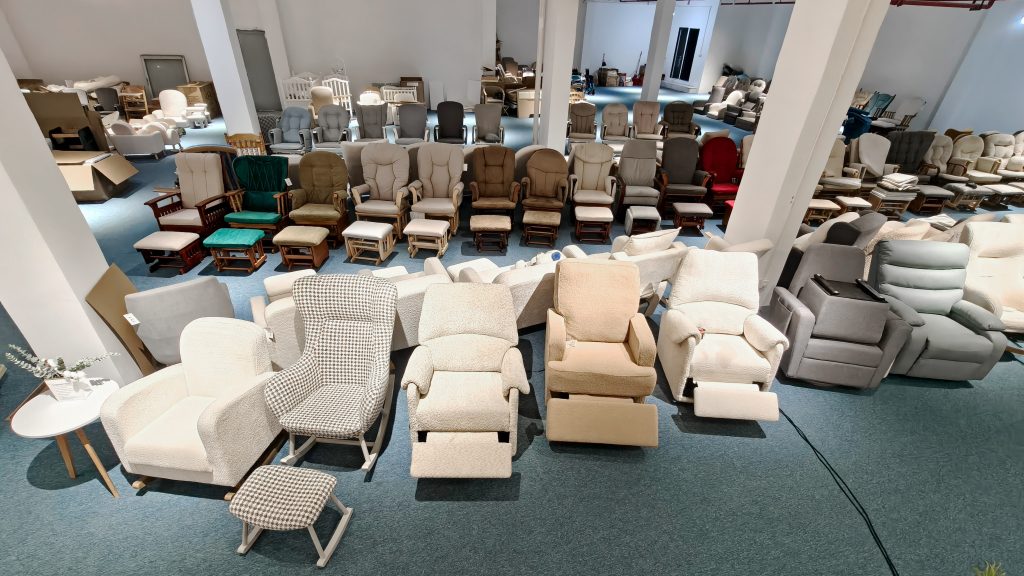
Supporting Nursery Furniture Brands Through OEM and ODM
At Tianfeng Baby, we support international furniture brands, importers, and wholesalers with customized nursery and children’s furniture development.
Depending on project requirements, customization may include:
- Seat dimensions and chair proportions.
- Upholstery materials and colors.
- Armrest and backrest design.
- Rocking, gliding, or reclining configurations.
- Product appearance and structural adjustments.
- Packaging requirements.
We also assist customers with product sampling and testing arrangements.
When a prototype requires modifications following testing or customer evaluation, our team can work on further adjustments.
Product compliance must always be assessed against the applicable requirements of the intended market.
For brands developing nursery furniture collections, understanding real consumer needs is an important starting point.
Looking for an OEM/ODM nursery chair manufacturer?
Explore our nursery furniture collection or contact Tianfeng Baby to discuss your product development requirements.
Frequently Asked Questions About Nursery Chairs
Do I Really Need a Nursery Chair?
No. A nursery chair is not essential for every family. However, a comfortable, supportive chair can make feeding, soothing, and spending time with your baby more convenient. A suitable regular armchair may work just as well.
Is a Nursery Chair Worth Buying?
A nursery chair may be worth buying if you expect to spend considerable time feeding or comforting your baby and do not already have a suitable chair. Consider comfort, available space, budget, and whether you can use the chair after the baby stage.
Can I Breastfeed in a Regular Chair?
Yes. Breastfeeding does not require a specialized nursery chair. A regular chair can work well if it provides comfortable support and allows you to position your baby appropriately.
Is a Glider or Rocking Chair Better for a Nursery?
Neither is universally better. Gliders generally provide a guided gliding motion, while rocking chairs move on curved rockers. The best choice depends on personal comfort, room layout, and preferred movement.
What Makes a Nursery Chair Comfortable?
Important factors include supportive cushioning, appropriate seat dimensions, comfortable armrests, suitable backrest height, and stable construction. Individual body size and feeding preferences also influence comfort.
How Long Will I Use a Nursery Chair?
Many families continue using nursery chairs beyond the newborn stage for reading, relaxing, or spending time with their children. Some upholstered gliders and recliners can also function as ordinary living room chairs.
Are Nursery Recliners Safe for Feeding a Baby?
Nursery recliners can provide a comfortable place for awake, attentive feeding when used according to the manufacturer’s instructions. However, parents should never sleep while holding a baby in a recliner. Babies should sleep on an appropriate, separate, firm, flat sleep surface.
Final Thoughts: Is a Comfortable Nursery Chair Right for You?
So, do you really need a nursery chair?
The answer depends on your lifestyle, available space, and personal comfort preferences.
A dedicated nursery chair is not a parenting necessity, but it can be a valuable addition to a well-planned nursery.
From providing comfortable support during feeding to creating a relaxing place for everyday family routines, a thoughtfully designed chair can offer benefits beyond its appearance.
When choosing a nursery chair, prioritize supportive seating, practical dimensions, reliable construction, and long-term usability.
For nursery furniture brands and retailers, these same considerations provide valuable insights into what parents look for when choosing nursery seating.
At Tianfeng Baby, we believe successful nursery furniture design begins with understanding the people who use it.
Through OEM and ODM manufacturing, product customization, and prototype development, we help international customers turn practical nursery furniture concepts into finished products.
Explore our nursery chair collections or contact Tianfeng Baby to discuss your next furniture project.