Location: Gaoming District, Foshan, Guangdong, China

Behind the Sample: How Tianfeng Baby Customizes Nursery and Kids’ Furniture

For buyers developing a new nursery or kids’ furniture collection, customization is rarely just about adding a logo or choosing a different color.
A product may need a wider seat, a different fabric, a redesigned control panel, or even a small visual adjustment that changes the whole character of the piece. At Tianfeng Baby, new-product development begins with a practical conversation: what the customer needs, what reference style they have in mind, and which details must work differently for their market.
We communicate with customers about product references, dimensions, structural details, wood options, fabric cards, color codes, and functional requirements before producing a sample. Here are several recent examples of how we turn customer ideas into customized nursery and kids’ furniture.
1. Starting With the Customer’s Idea
Every custom project begins with a clear understanding of the customer’s product direction.
Some customers send a reference image or a hand-marked sketch. Others provide target dimensions, fabric preferences, functional requirements, or feedback on an existing design. Our team reviews each request from both a design and production perspective before moving forward.
For wooden nursery and kids’ furniture, this may include the choice of wood, finish color, hardware, and construction details. For upholstered chairs and recliners, it often involves seat dimensions, foam comfort, fabric selection, stitching, and functional components.
The goal is not simply to copy a reference. It is to develop a product that reflects the customer’s requirements while remaining suitable for sampling and production.
2. Adjusting a Nursing Recliner for More Comfortable Feeding
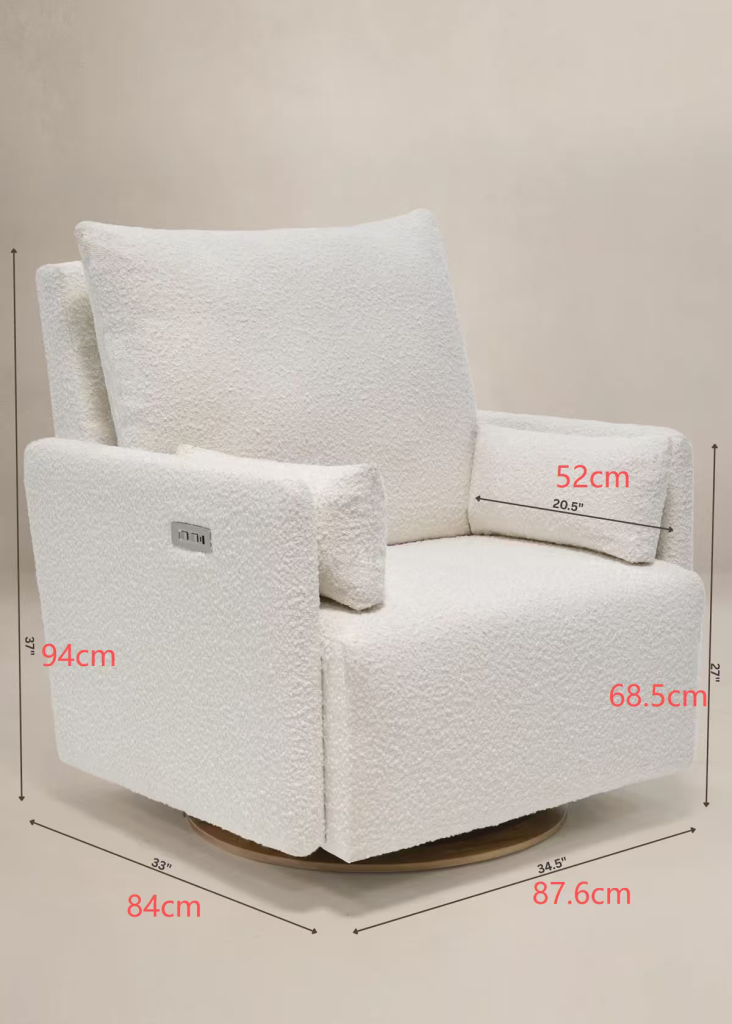
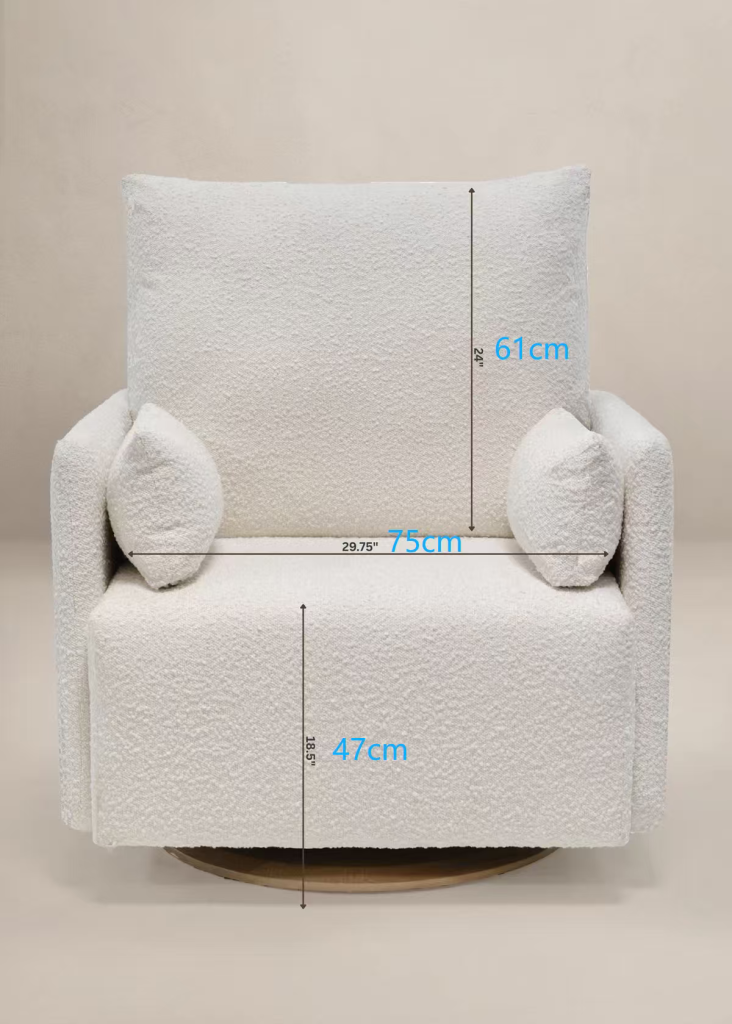
In one recent project, a customer asked us to increase the internal seat width of a nursing recliner.
This was not simply a dimensional change. For a nursing chair, seat width can directly affect how comfortably a parent and baby can feed together as feeding routines change over time.
For parents who bottle-feed, including those using formula, extra room can make it easier to find a comfortable and supported position for holding the baby and bottle. It gives the caregiver more flexibility to adjust the baby’s posture while feeding. A suitable feeding position should always follow safe-feeding guidance from healthcare professionals.
For breastfeeding parents, a wider seat can become even more valuable as the baby grows. It provides more room for the mother’s arms, as well as more space for the baby’s legs and natural movement. As babies become more active, they often interact more with their parents during feeding. A more spacious nursing chair can help both parent and child stay relaxed and comfortable.
After reviewing the customer’s requested dimensions, we adjusted the internal seat structure and produced a customized sample for evaluation. The sample allowed the customer to see and experience the updated proportions before confirming the production version.
3. Adding a Cup Holder to a Power Nursing Recliner
When developing nursing recliners, we consider not only mothers who breastfeed directly, but also families using mixed feeding or bottle-feeding as their baby grows.
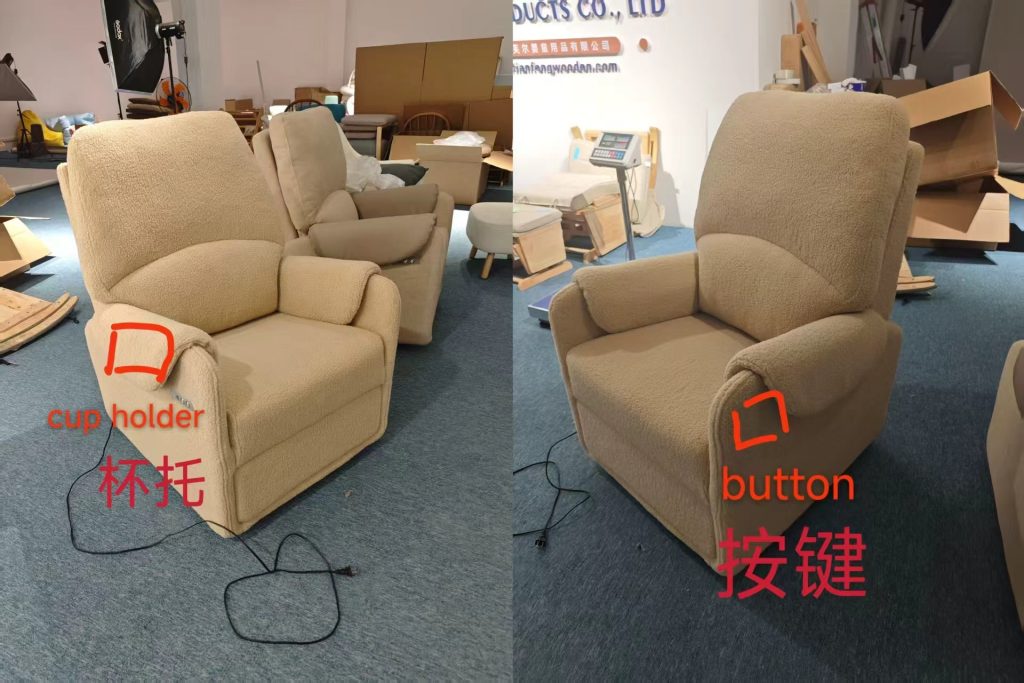
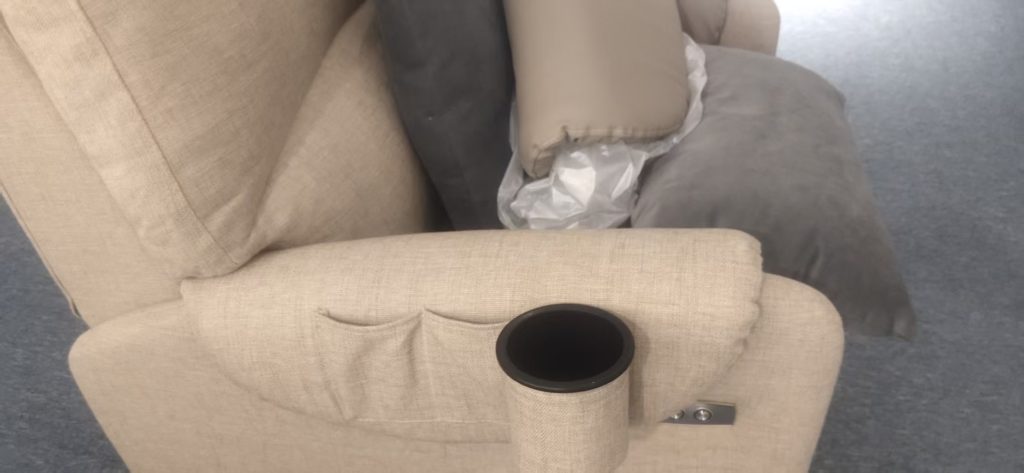
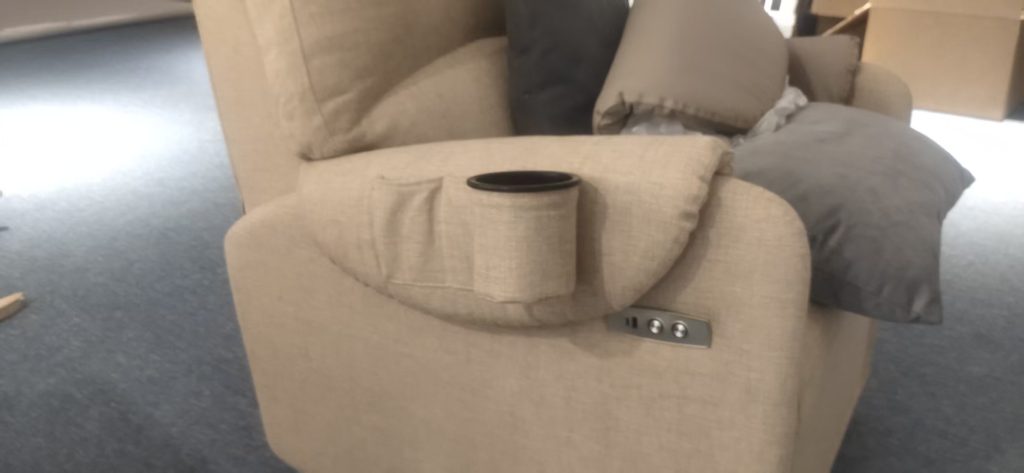
In another project, a customer asked us to add a cup holder to the armrest of a power recliner. From a real-life user-experience perspective, this was a practical detail: a parent may need a convenient place to set down a prepared bottle, water, or other small feeding essentials while caring for a baby.
The challenge was to make the cup holder functional without making it look like an added-on accessory. Based on the customer’s requested position, we adjusted the location of the power buttons and integrated the cup holder into the armrest. Its upholstery, shape, and placement were designed to work visually with the overall recliner.
The result was a feature that supports everyday use while remaining consistent with the chair’s appearance. It is practical, balanced, and not visually intrusive. Our customer was very satisfied with the finished sample.
4. Reworking the Bear Ears on a Kids’ Sofa
Customization is not only about structure and function. Sometimes, a small design detail can help a product stand out in a competitive market.
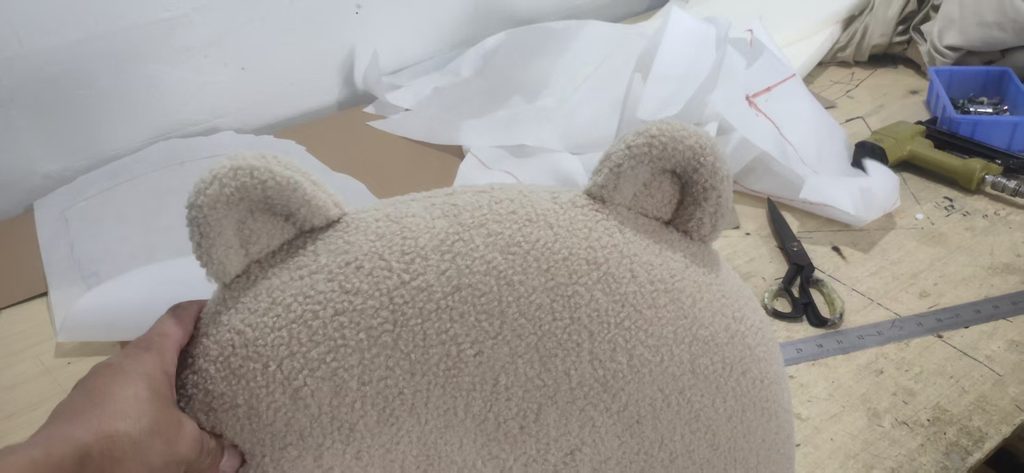
For a teddy bear kids’ sofa project, the customer had researched competing products and wanted a design that felt more distinctive. They asked us to explore a different placement for the bear ears.
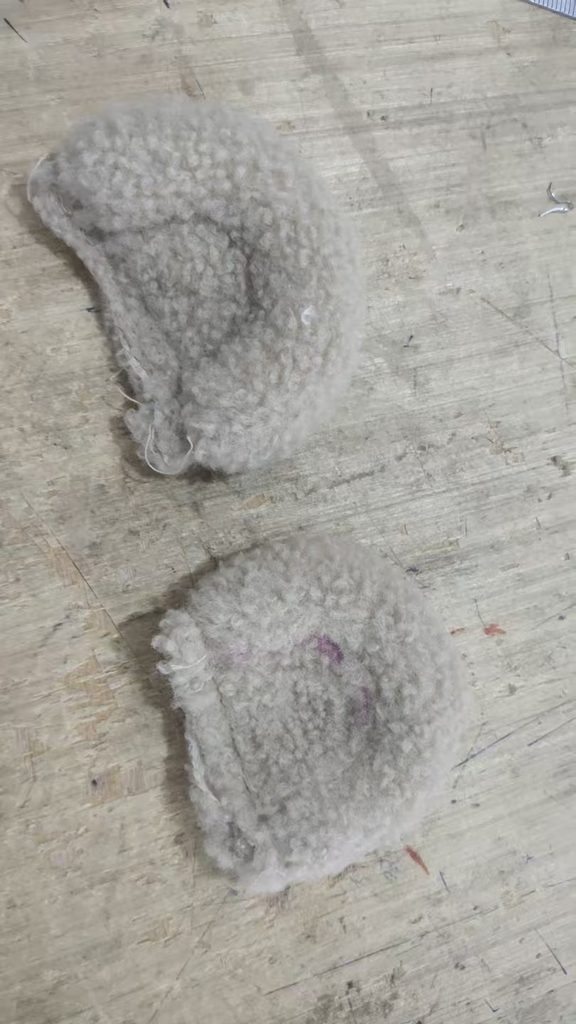
Our team reviewed the request from both a production and aesthetic perspective. We proposed a revised solution that could be sewn securely, remain suitable for production, and create a more intentional visual character for the sofa. Our upholstery team then remade and stitched the bear ear pieces according to the new placement.
The adjustment helped the product avoid an overly similar market appearance while giving it a stronger sense of design. It is a small change, but one that makes the final kids’ sofa feel more considered, recognizable, and differentiated.
5. Material and Fabric Selection Before Sampling
A finished sample is the result of many small decisions made before production begins.
For wood furniture, we communicate with customers about material options, finishes, colors, and the appearance they want to achieve. For upholstered products, customers can select from fabric cards, colors, textures, and performance requirements. These choices are reviewed alongside the product structure so that the final sample looks right and is suitable for production.
Whether the request is a new fabric color, a different wood tone, a wider seat, an integrated cup holder, or a redesigned decorative detail, our goal is to turn the customer’s concept into a product that can be evaluated clearly before an order is finalized.
From Reference to Production-Ready Sample
A custom furniture project works best when communication is specific and visual. The more clearly a customer can share their reference, dimensions, intended market, and preferred materials, the more accurately we can develop the sample.
At Tianfeng Baby, we support OEM and ODM development for nursery furniture, nursing chairs, recliners, kids’ sofas, and other children’s furniture. From early product discussions to sample adjustment and production planning, we work with customers to create products that fit their collections and market needs.
Looking for a custom nursery or kids’ furniture supplier?
Send us your reference images, drawings, dimensions, or ideas. Our team will review the details and discuss the best way to develop your sample.
What can customers customize at Tianfeng Baby?
Our sampling and customization capabilities extend beyond the products shown in our catalog. We welcome custom development projects for wooden furniture and toys used in nursery, baby, and children’s settings.
Customers can share their concepts, reference images, or drawings and discuss product dimensions, wood selection, finishes, fabric types and color codes, upholstery details, and functional features with our team. We review each project’s design and production requirements before developing a sample.
Recent projects include adjusting a nursing recliner’s internal seat width, adding an armrest cup holder and relocating power controls, and redesigning the ear placement on a teddy bear kids’ sofa.
Does Tianfeng Baby help with product testing after sampling?
Yes. After developing a sample, we assist customers with arranging relevant product testing based on the product type, intended age group, target market, and applicable safety requirements.
If a sample does not pass a required test, we review the findings, make the necessary changes to its design, materials, or construction, and support further testing. We continue this process of adjustment and retesting to address the identified issues and work toward meeting the applicable safety requirements before moving forward with production.
Test results apply to the specific product and configuration evaluated. Changes to materials, dimensions, or components may require further assessment or retesting.