Location: Gaoming District, Foshan, Guangdong, China

The Growing Demand for Multifunctional Baby Furniture

Baby furniture is no longer expected to serve just one purpose.
As modern families look for better ways to use space, extend product life cycles, and create flexible nursery environments, multifunctional baby furniture is becoming an increasingly important part of nursery design.
From adjustable high chairs that adapt as children grow to convertible cribs, storage-integrated changing tables, and nursery chairs designed for feeding, relaxing, and everyday care, multifunctional design is changing the way parents think about baby furniture.
For retailers, distributors, and baby furniture brands, this trend also creates new opportunities. Instead of focusing only on individual functions, manufacturers are increasingly being asked to develop products that combine practicality, safety, durability, and long-term usability.
Why Is Demand for Multifunctional Baby Furniture Growing?
Several changes in the way families live and shop are influencing the development of nursery furniture.
1. Families Want to Make Better Use of Space
Not every nursery has a large amount of available floor space.
For families living in apartments, urban homes, or smaller houses, every piece of furniture needs to justify the space it occupies. This makes products that combine several functions particularly attractive.
A changing unit, for example, may incorporate drawers or shelves for storing diapers, clothing, and other nursery essentials. Instead of requiring separate storage furniture, several everyday functions can be integrated into one product.
The same principle applies to other categories of space-saving nursery furniture.
Good multifunctional design is therefore not simply about adding more features. It is about making better use of the space already occupied by the furniture.
2. Parents Are Looking for Furniture That Grows with Their Children
Babies develop quickly, and their furniture requirements change along with them.
Products designed for only a very short stage of childhood may need to be replaced relatively quickly. This has encouraged greater interest in adjustable and convertible baby furniture.
A well-designed product may accommodate different stages through features such as:
- Adjustable heights
- Removable components
- Multiple seating positions
- Convertible structures
- Adjustable footrests
- Flexible storage configurations
This approach can extend the useful life of a product and provide families with greater value over time.
For baby furniture brands, this creates an important product-development opportunity: designing furniture around stages of growth rather than a single age or function.
Popular Types of Multifunctional Baby Furniture
Multifunctionality can take many forms depending on the product category.
Some of the most practical applications can already be seen across modern nursery furniture collections.
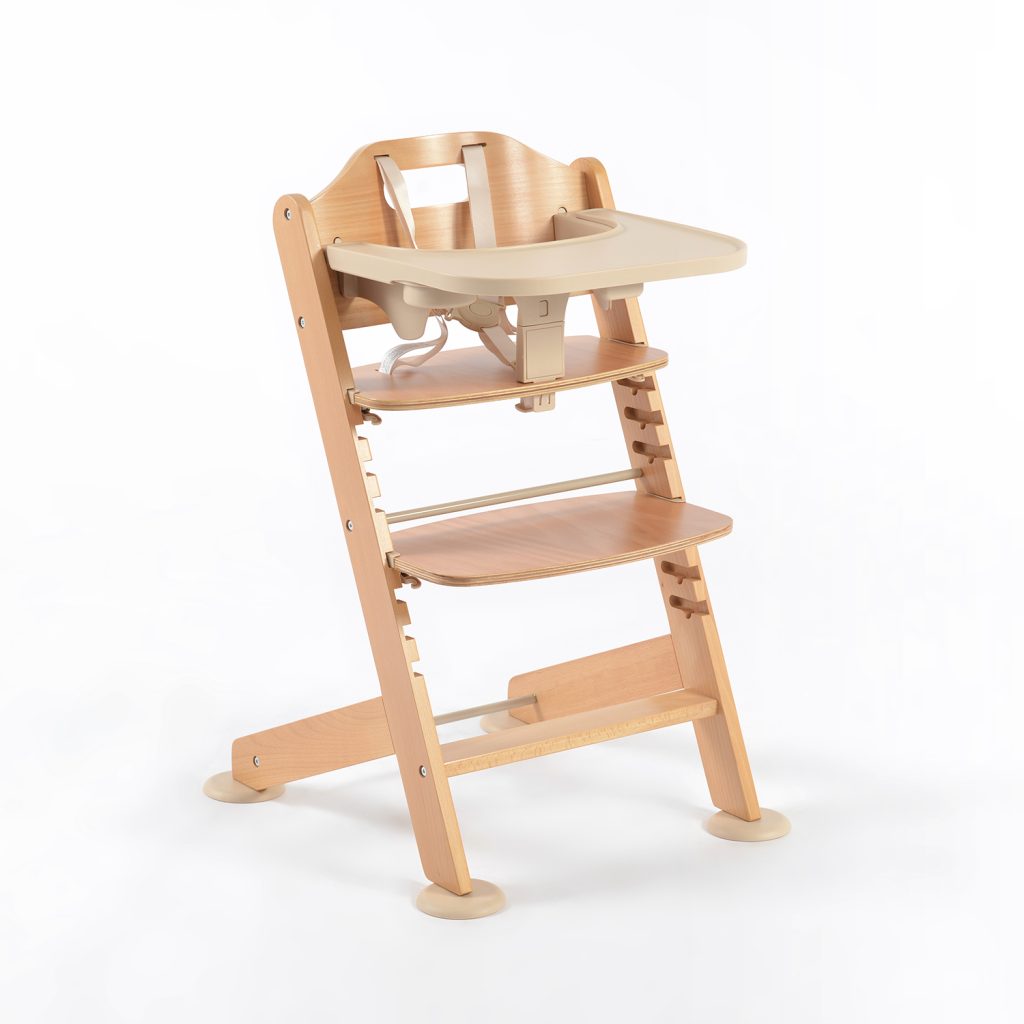
Adjustable High Chairs
Adjustable high chairs are a good example of furniture designed around a child’s changing needs.
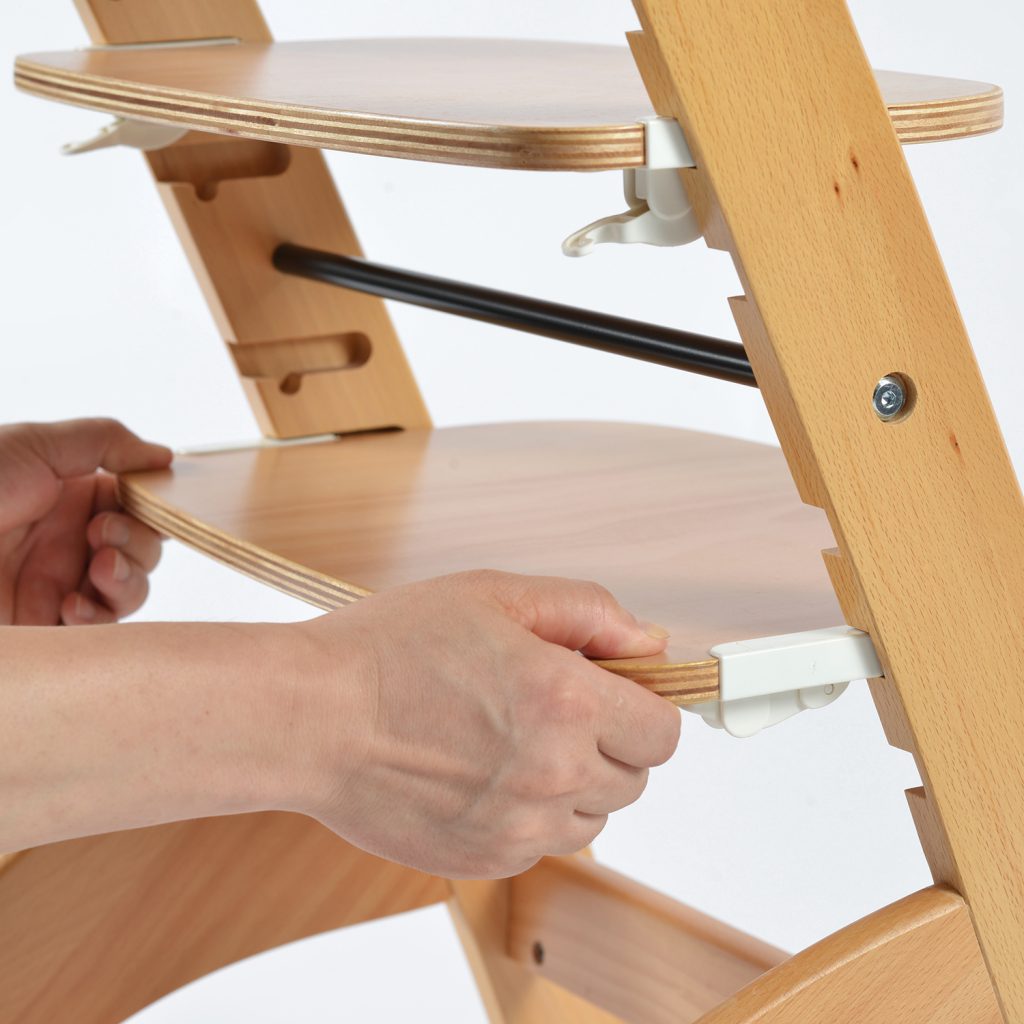
Features such as adjustable footrests, removable trays, or adaptable seating positions can help a high chair remain practical through different stages of early childhood.
For manufacturers, however, adjustability also requires careful engineering. Each adjustment point needs to remain stable and secure during everyday use.
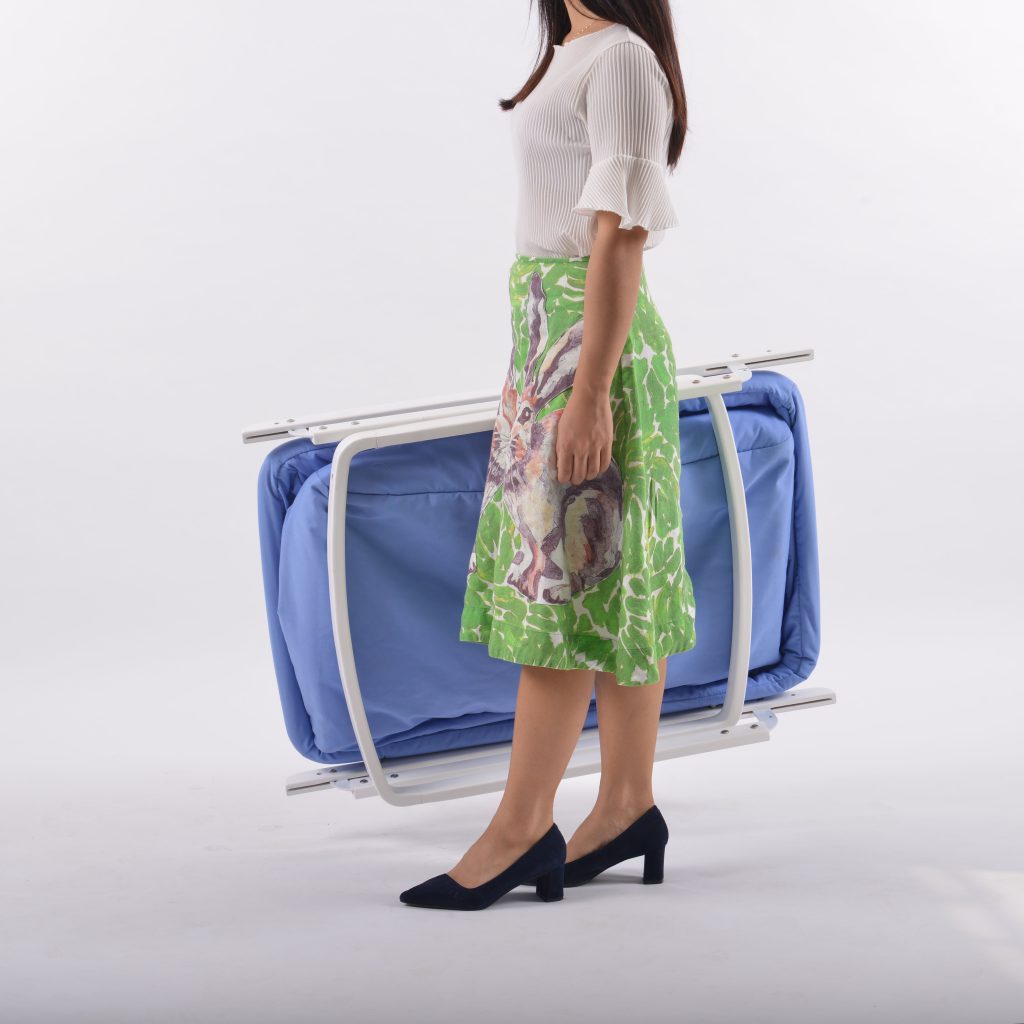
Convertible Baby Cribs
The crib is one of the largest and most important pieces of furniture in many nurseries.
Because of its size and relatively high purchase value, parents may prefer designs that can remain useful for longer.
Depending on the product design and applicable safety requirements, some convertible baby cribs may be adapted into toddler beds or other configurations as the child grows.
For brands developing convertible crib collections, the challenge is to balance flexibility with structural stability, ease of assembly, and compliance with the relevant safety requirements of the destination market.
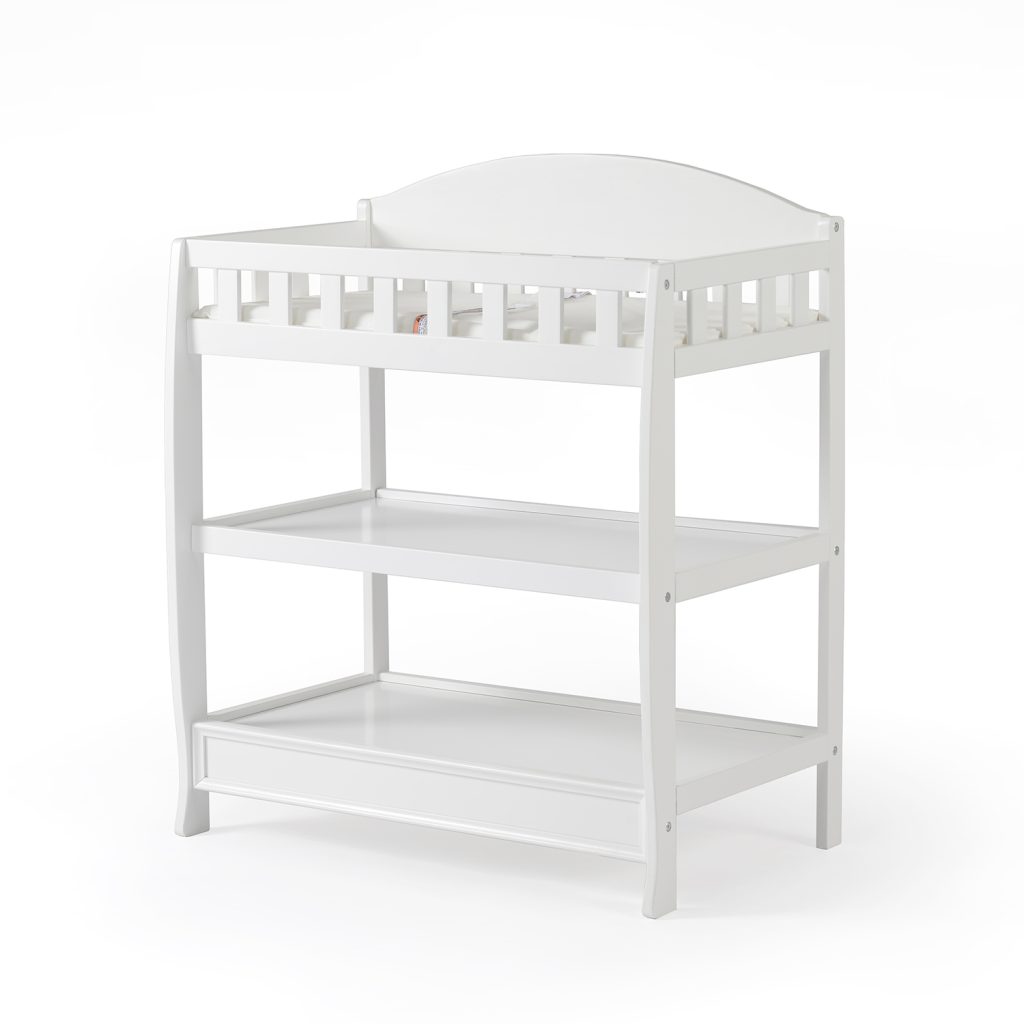
Changing Tables with Integrated Storage
Changing tables naturally lend themselves to multifunctional design.
Drawers, open shelves, cabinets, and removable changing surfaces can help transform a changing station into a more versatile nursery storage solution.
One particularly important consideration is what happens when the changing function is no longer required.
Furniture designed so that the storage component remains useful afterward may provide a longer practical life cycle than a product intended exclusively for diaper changing.
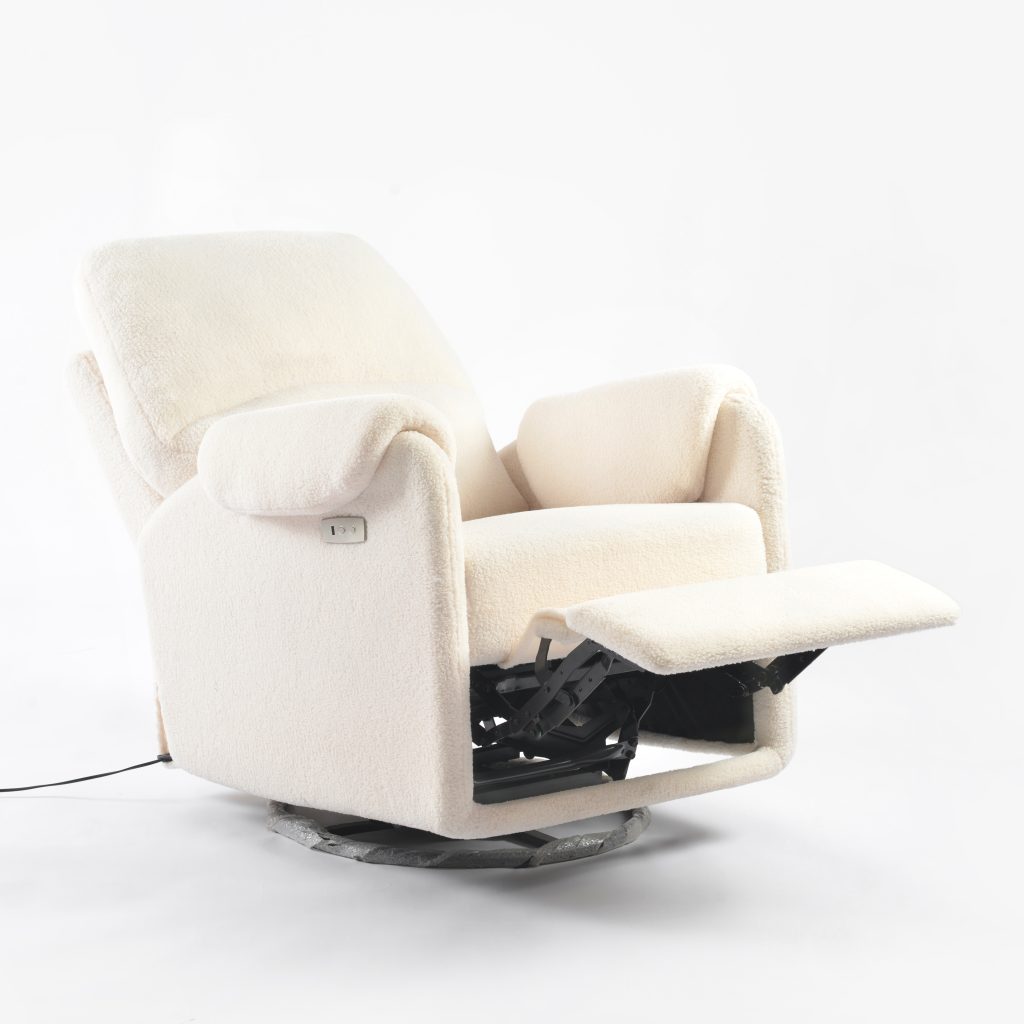
Nursery Gliders, Rocking Chairs and Recliners
Multifunctionality is not limited to wooden nursery furniture.
A nursery chair may be used for feeding, soothing a baby, reading, resting, and spending quiet time with a child.
Modern nursery seating can also combine different motion or comfort functions, including gliding, rocking, reclining, swiveling, or supportive seating configurations.
For this category, the definition of multifunctionality is therefore slightly different: the furniture does not necessarily transform into another product, but it can support several activities throughout daily family life.
Multifunctionality Is About Product Life Cycle, Not Just More Features
There is an important distinction between a product with many features and a genuinely useful multifunctional product.
Adding mechanisms, accessories, or moving components does not automatically make furniture better.
Each additional feature may introduce new considerations related to:
- Structural stability
- Pinch and entrapment points
- Hardware durability
- Assembly complexity
- Product weight
- Packaging dimensions
- Manufacturing cost
- Testing requirements
For this reason, successful multifunctional baby furniture should begin with a clear question:
Does this additional function provide meaningful value to the family?
A simple adjustable feature that extends the useful life of a product may sometimes provide more value than several complicated mechanisms that parents rarely use.
Safety Remains the Foundation of Multifunctional Design
When baby furniture becomes more adjustable or convertible, product safety becomes even more important.
Moving components, hinges, adjustment mechanisms, removable parts, and different product configurations all need to be considered during product development.
Material selection is another important part of the process, particularly for furniture used in children’s environments.
Manufacturers and brands should evaluate factors such as structural performance, surface finishes, hardware, materials, and the applicable requirements of the intended market.
What Should Baby Furniture Brands Consider?
For retailers, importers, and private-label brands planning a multifunctional furniture collection, product development should extend beyond appearance.
Several practical questions should be considered early in the development process:
- Who is the intended user and age group?
- Which functions will families genuinely use?
- Can the product adapt to different stages of childhood?
- Is the adjustment or conversion process intuitive?
- Does adding a function affect structural stability?
- Can the product be packaged efficiently for international shipping?
- How complicated will assembly be for the final customer?
- Which tests or standards may apply in the destination market?
These considerations are particularly important for international brands, where packaging, logistics, assembly, and compliance can significantly influence the commercial viability of a design.
Opportunities for OEM & ODM Baby Furniture Development
For brands, multifunctional furniture also creates opportunities for product differentiation.
Rather than sourcing the same standard product available throughout the market, an OEM or ODM project can adapt details such as dimensions, materials, upholstery, finishes, storage configurations, hardware, and functional features to suit a specific customer group.
At Tianfeng Baby, we manufacture nursery and kids furniture for international markets and work with customers on OEM and ODM product development.
Our product categories include baby cribs, high chairs, changing tables, nursery gliders, rocking chairs, recliners, kids seating, beds, bookshelves, and other children’s furniture.
During product development, functionality needs to be considered alongside manufacturing feasibility, packaging, materials, structure, and the requirements of the target market.
Designing Baby Furniture for More Than One Stage
The growing interest in multifunctional baby furniture reflects a broader change in how families evaluate nursery products.
Parents increasingly value furniture that uses space efficiently, supports everyday routines, and remains useful as their children grow.
For baby furniture brands, this does not necessarily mean making products more complicated.
In many cases, the best multifunctional furniture is designed around a simple principle:
Create one well-designed product that can remain useful for longer.
As nursery spaces and consumer expectations continue to evolve, adaptable, practical, and thoughtfully designed furniture is likely to remain an important direction for baby furniture product development.
Looking for a Baby Furniture Manufacturing Partner?
Tianfeng Baby provides OEM and ODM nursery and kids furniture manufacturing for international brands, retailers, distributors, and importers.
Whether you are developing an adjustable high chair, nursery seating collection, baby crib, changing table, or a new multifunctional furniture concept, our team can work with you from product development through manufacturing.
Contact Tianfeng Baby to discuss your next baby furniture project.