Location: Gaoming District, Foshan, Guangdong, China
Choosing Safe Materials for Kids Furniture: A Buyer’s Guide

When sourcing kids furniture, appearance, price and functionality are important—but material safety deserves equal attention.
Children interact with furniture differently from adults. They climb on chairs, lean against tables, touch painted surfaces and use furniture as part of everyday play. For buyers, retailers and children’s furniture brands, this means material selection should be considered together with surface finishing, construction and product testing.
Terms such as “non-toxic,” “eco-friendly,” and “natural” may sound reassuring, but they do not tell buyers exactly what has been evaluated.
A more useful question is:
What materials are used, and what testing or documentation supports the safety of the finished product?
At Tianfeng Baby, this is an important part of how we approach the development and manufacturing of nursery and kids furniture.Why Material Safety Matters in Kids Furniture
Kids furniture may contain several different materials within a single product.
A wooden learning tower, for example, can include wood, plywood, coatings, hardware and other components. Upholstered children’s furniture may combine a wooden or metal frame with foam, fabric and finishing materials.
This means buyers should avoid evaluating a product based on one material claim alone.
A better approach is to consider:
- the materials used in the structure;
- paints, coatings and surface finishes;
- accessible edges, points and wooden surfaces;
- the intended age and use of the product;
- relevant chemical and physical testing;
- and the traceability of materials where required.
The goal is not simply to find a material that sounds safe. It is to understand how materials perform as part of the finished product.1. Start with the Wood
Wood is one of the most widely used materials in kids furniture, from learning towers and bookshelves to kids tables, chairs and beds.
But buyers should look beyond descriptions such as “wooden furniture” or “solid wood.”
Important questions include:
What type of wood is used?
Does the product contain plywood or other engineered wood?
What surface treatment is applied?
Can the wood supply chain be traced when required?
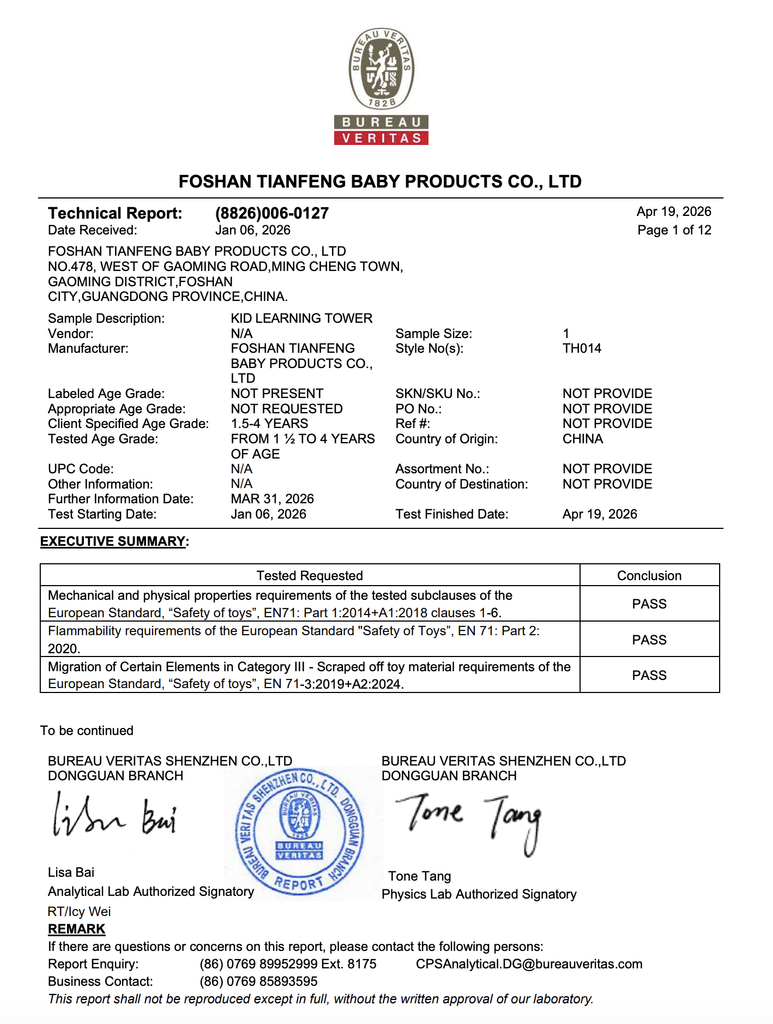
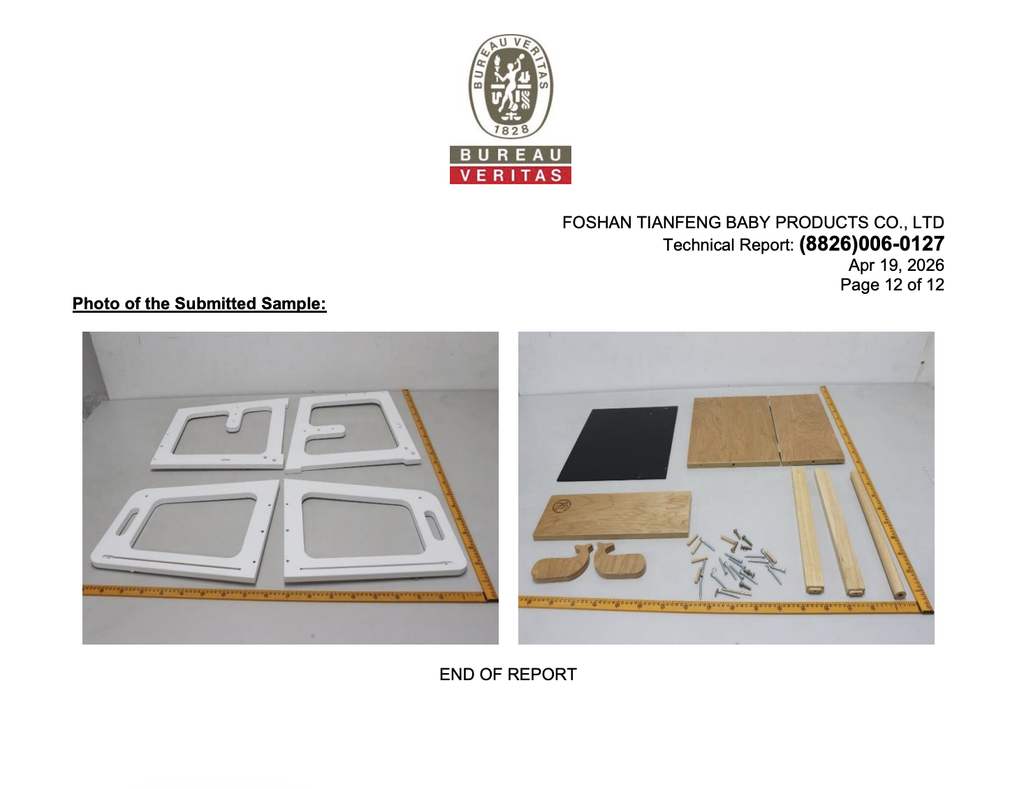
For example, in a 2026 Bureau Veritas test report for a Tianfeng Baby Kid Learning Tower (TH014), the tested component list identifies wood and plywood within the frame, together with transparent and black coatings on different surfaces.
2. Look Beyond “Non-Toxic” Paint Claims
One of the most common questions buyers ask about kids furniture is whether the paint or coating is “non-toxic.”
It is an understandable concern—but “non-toxic” alone is not a testing standard.
Instead of relying only on marketing descriptions, buyers should ask suppliers what testing has been carried out on relevant materials or the finished product.
For the Tianfeng Baby Kid Learning Tower TH014, Bureau Veritas evaluated Migration of Certain Elements in Category III – Scraped-off Toy Material according to EN 71-3:2019+A2:2024, and the tested sample received a PASS result.
This is especially relevant when evaluating coatings and accessible surface materials used on products intended for young children.
3. Pay Attention to Coatings and Surface Finishes
A safe material choice is not only about the material underneath the surface.
The finish matters too.
Paints and coatings affect the surfaces children actually touch, which is why buyers should ask how finishes are specified and whether relevant components have been included in product testing.
The Bureau Veritas component list for Tianfeng Baby’s TH014 learning tower specifically identifies both a transparent coating on the frame surface and a black coating on the board surface among the tested components.
This provides a useful lesson for buyers:
Do not evaluate only the wood. Ask about the complete material system—including coatings and finishes.
4. Smooth Edges and Splinter Control Matter Too
Chemical testing is only one part of material safety.
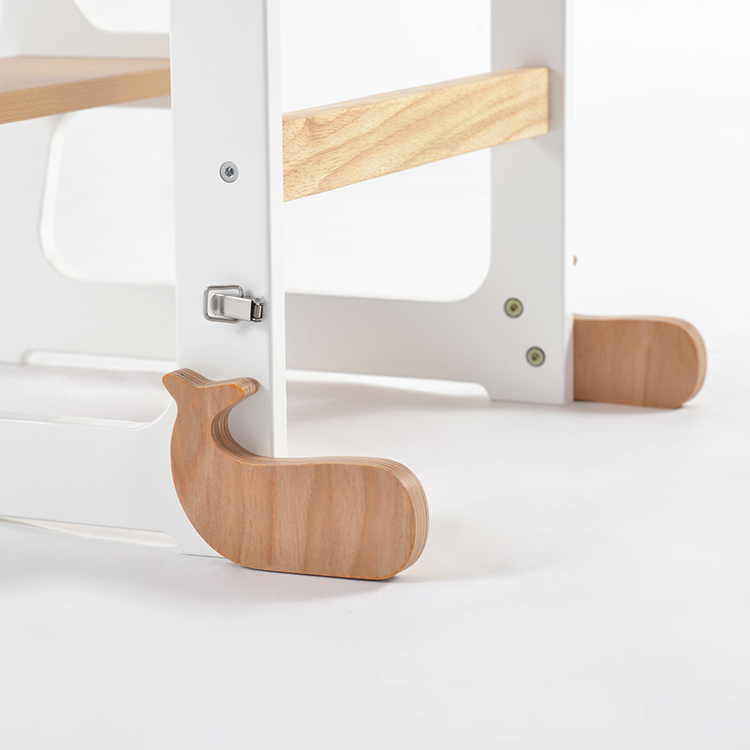
A wooden component could meet a chemical requirement and still present a problem if the finished surface has sharp edges, dangerous points or splinters.
This is particularly important for kids furniture because children frequently grip, climb on and move around furniture.
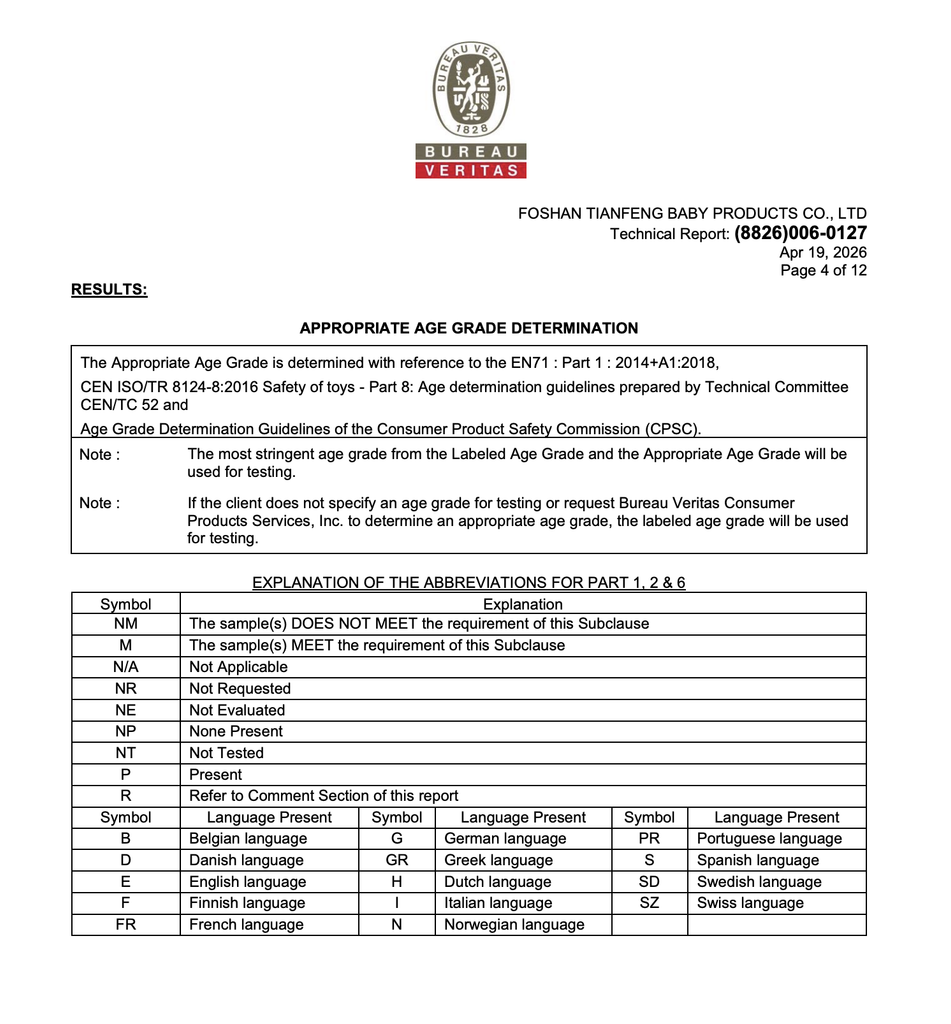
In the EN 71-1 mechanical and physical assessment of the tested TH014 learning tower, the report records M (Meets the requirement) for several relevant items, including:
- Material cleanliness
- Assembly
- Edges
- Points and metallic wires
- Splinters
For buyers, this demonstrates why material selection and manufacturing quality should be evaluated together.
5. Consider Flammability Requirements
Depending on the product type, intended use and destination market, buyers may also need to consider applicable flammability requirements.
For the same TH014 Kid Learning Tower sample, Bureau Veritas tested the product against the flammability requirements of EN 71-2:2020, with a PASS result recorded in the report.
This does not mean that one test applies automatically to every type of kids furniture. Requirements should always be evaluated according to the specific product and target market.
6. Responsible Wood Sourcing and Traceability
Material safety and responsible sourcing are different concepts, but both can matter to today’s furniture buyers.
For companies with sustainability or responsible sourcing requirements, wood traceability can become part of supplier evaluation.
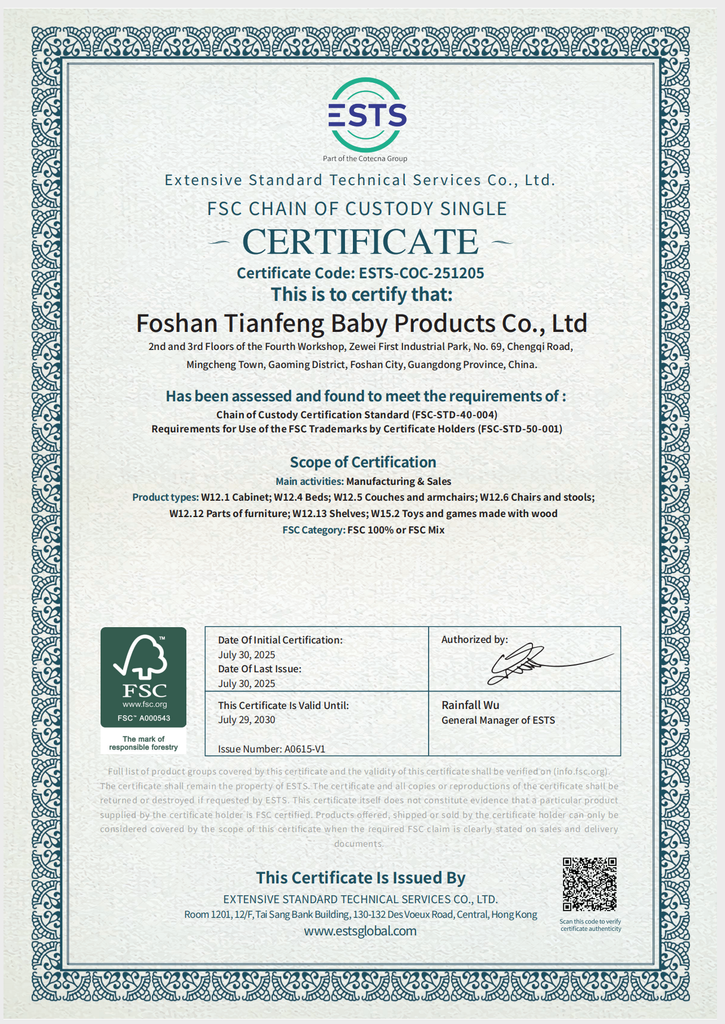
Tianfeng Baby holds an FSC Chain of Custody certificate covering manufacturing and sales across product categories including cabinets, beds, couches and armchairs, chairs and stools, furniture parts, shelves, and wooden toys and games. The certificate scope identifies the FSC categories as FSC 100% or FSC Mix and shows validity through July 29, 2030.
Importantly, an FSC Chain of Custody certificate does not mean that every product manufactured by a certificate holder is automatically FSC certified. FSC claims for specific supplied products need to be supported by the appropriate sales and delivery documentation.
For buyers requiring FSC sourcing, this is therefore something that should be discussed during product development and ordering.
7. Safe Materials Still Need Safe Construction
Choosing appropriate materials does not automatically make a finished piece of furniture safe.
For chairs in particular, buyers also need to consider factors such as:
construction, stability, strength, accessible edges and the security of load-bearing components.
This is where product-level furniture testing becomes important.
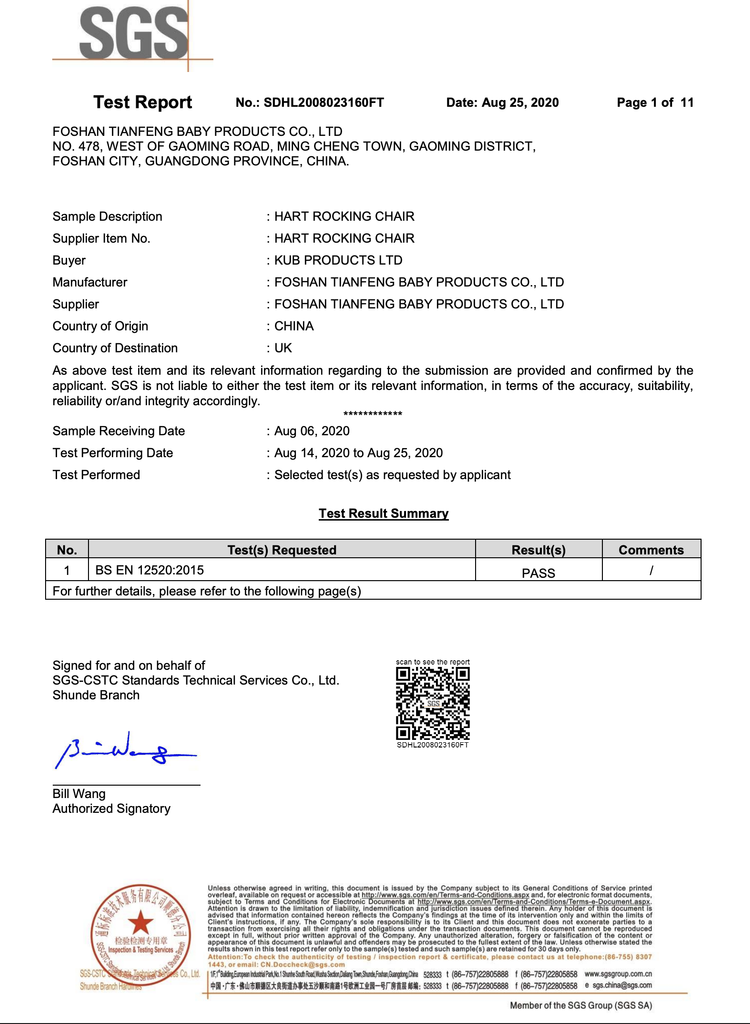
Tianfeng Baby has submitted multiple seating products for third-party testing to BS EN 12520:2015 — Furniture — Strength, durability and safety — Requirements for domestic seating.
For example, an SGS report for the Hart Rocking Chair manufactured by Tianfeng Baby records a PASS result for BS EN 12520:2015. The report’s constructional requirements address matters including rounded or chamfered accessible edges, secure load-bearing parts and stability requirements.
Other Tianfeng Baby seating products in the provided reports include the Chatsworth Glider & Footstool and the Paxton Nursing Rocking Chair.
This is why we believe buyers should think about furniture safety as a complete system:
Materials + Finishes + Construction + Stability + Product Testing
8. What Should Furniture Buyers Ask Their Supplier?
When evaluating a kids furniture manufacturer, a simple checklist can make material discussions much more useful.
| Ask your supplier | Why it matters |
|---|---|
| What wood and engineered wood materials are used? | Helps buyers understand the actual construction |
| What paints or coatings are applied? | Surface materials may require separate consideration |
| What testing has been performed? | Provides evidence beyond marketing claims |
| Was a material tested or was the finished product tested? | These are not necessarily the same thing |
| Which standard was used? | Requirements vary by product and destination market |
| Can the relevant test report be provided? | Helps buyers verify the scope and result |
| Is FSC sourcing available where required? | Supports responsible sourcing and traceability requirements |
| Has structural safety been evaluated? | Safe materials alone do not guarantee safe furniture |
A supplier who understands these questions should be able to discuss not only what a product is made from, but also how the materials and finished product are evaluated.
How Tianfeng Baby Approaches Kids Furniture Safety
At Foshan Tianfeng Baby Products Co., Ltd., we manufacture nursery and kids furniture for international customers.
Our experience covers products including nursery chairs, rocking chairs, gliders and a growing range of wooden kids furniture.
Our approach is simple:
Safety should be considered from material selection through finished-product construction—not added as a marketing claim at the end.
Depending on the product and customer requirements, this may involve material specifications, surface finishing controls, product design review and third-party testing against relevant standards.
The examples shown in this article represent specific tested products and test scopes. Product requirements can vary depending on design, age grading, product category and destination market.
For OEM and ODM projects, our team can work with buyers to discuss materials, product specifications and applicable testing requirements during product development.
Looking for a Kids Furniture Manufacturing Partner?
Whether you are developing a wooden learning tower, kids chair, nursery rocking chair or another nursery furniture collection, material and safety requirements are best discussed early in the development process.
Contact Tianfeng Baby to discuss your OEM/ODM project, material options and testing requirements.