Location: Gaoming District, Foshan, Guangdong, China

Nursery Furniture Factory in China: Buyer’s Checklist

Choosing a nursery furniture factory in China is not only about finding a competitive price. A reliable supplier should combine proven manufacturing capability, product safety knowledge, consistent quality control, flexible customization, and clear export communication.
1. Check Whether the Factory Is a Real Manufacturer
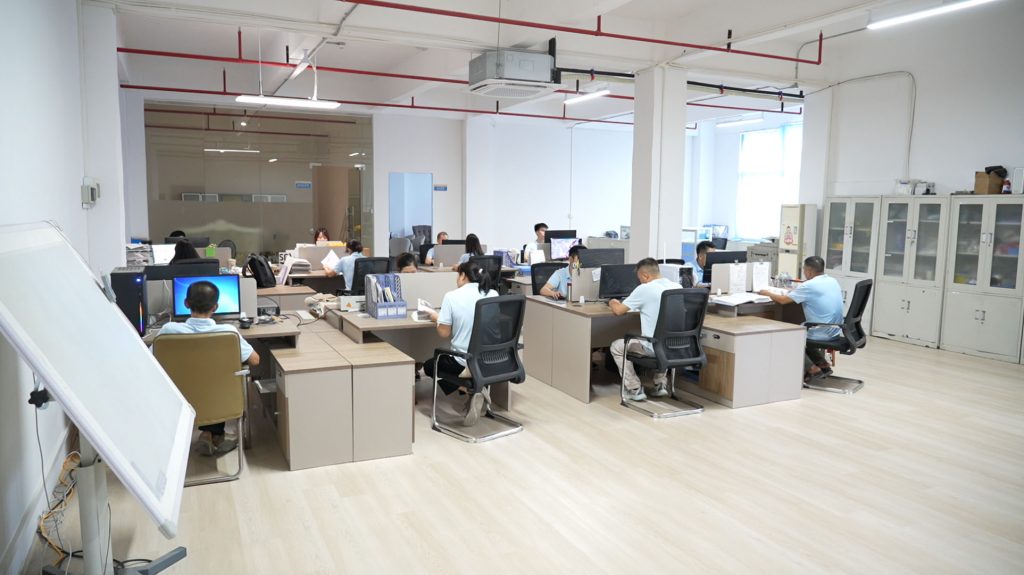
Start by confirming that the supplier has genuine manufacturing capability—not simply a catalog or trading-company role.
Verify the factory address, business registration, export history, and main product categories.
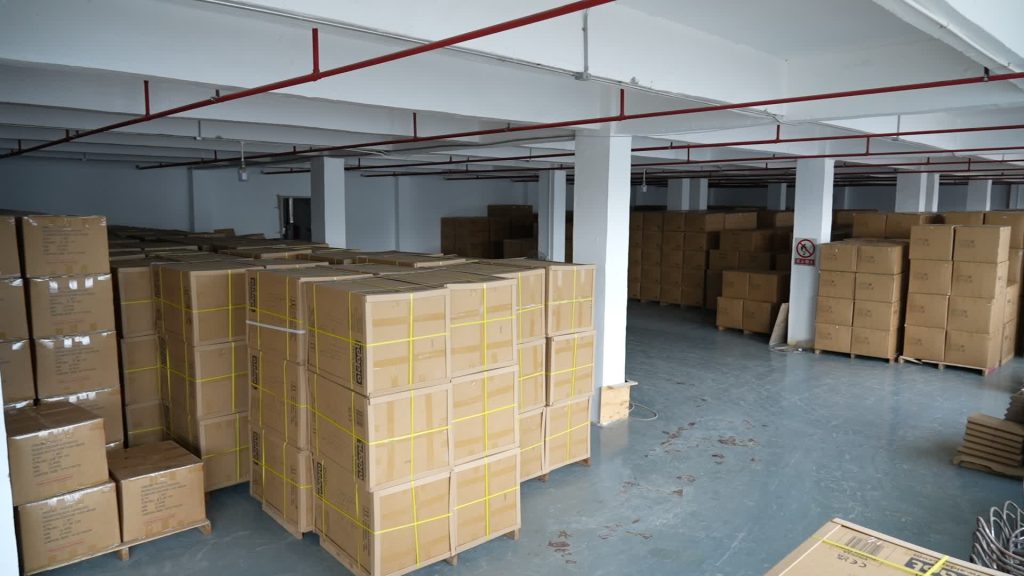
Request factory, workshop, warehouse, and showroom photos or a live video factory tour.
Ask whether the factory accepts customer audits or third-party inspections.
Understand the size and stability of the production team, equipment, and regular production capacity.
2. Evaluate Product Safety and Compliance
For nursery furniture, safety requirements must be discussed before product development, sampling, and quotation.
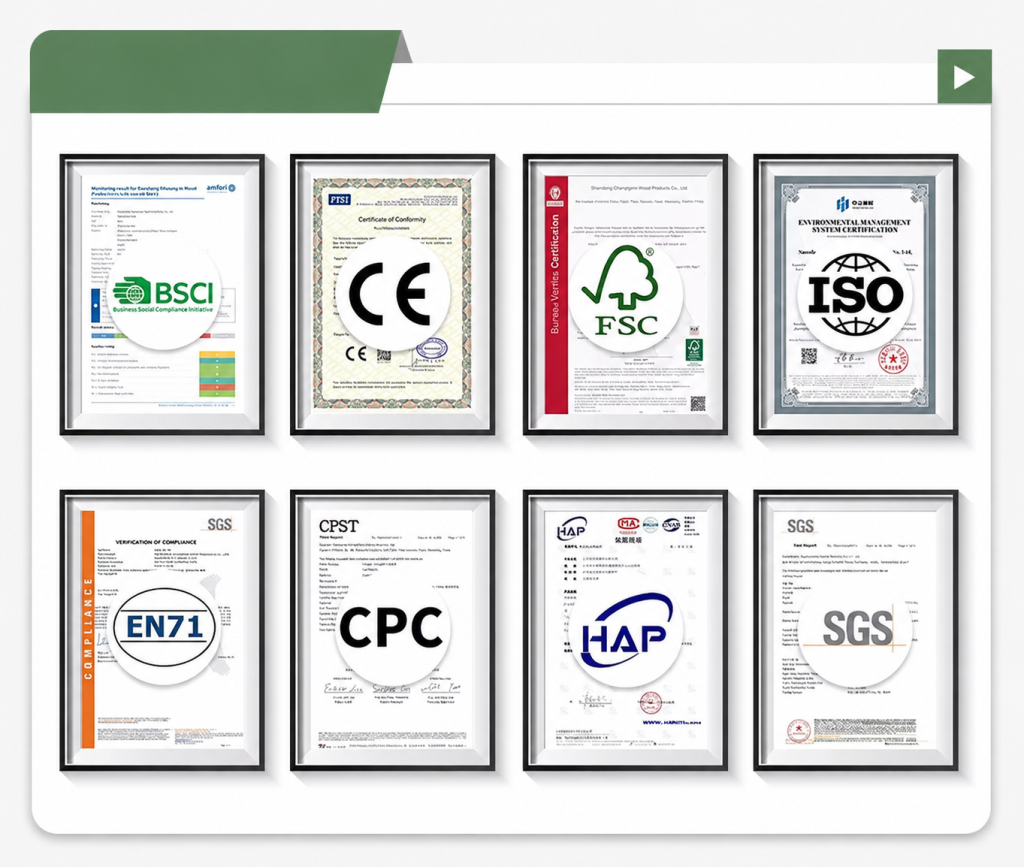
Clarify the safety requirements for the destination market, such as ASTM, CPSIA, EN standards, or FSC requirements where applicable.
Ask about coatings, wood panels, fabrics, and adhesives: are they non-toxic and appropriate for children’s products?
For cribs, review critical safety details such as slat spacing, structural stability, edge finishing, and entrapment risks.
Confirm that test reports relate to the actual product, material specification, and manufacturing source—not only a similar item.
3. Review Materials and Construction Quality
A product may look attractive in photographs while still falling short in durability, consistency, or finish quality.
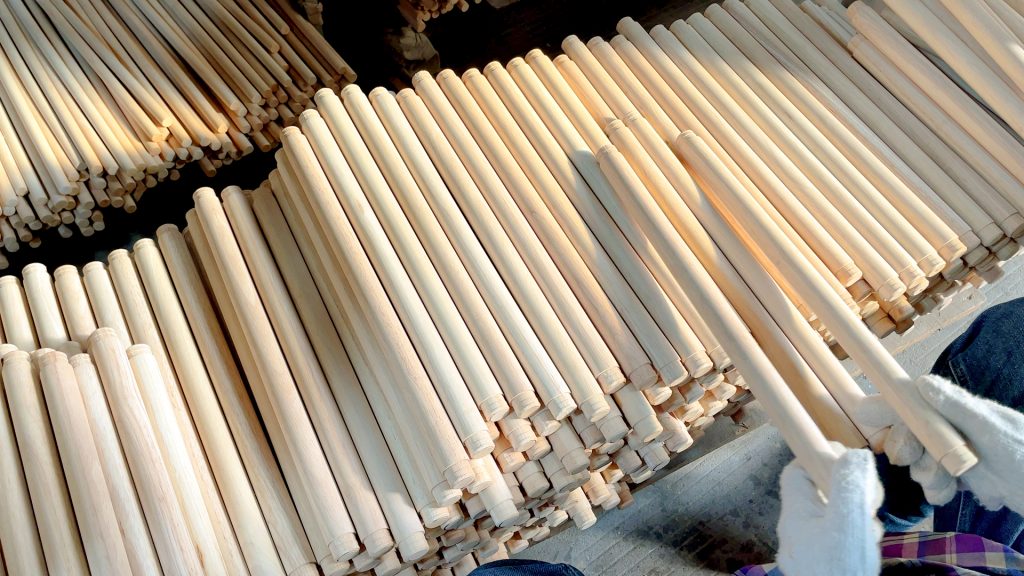
Ask where solid wood, plywood, MDF, metal, and plastic components are used within the product structure.
Check whether wood moisture is controlled to reduce cracking, warping, and instability after shipment.
Inspect hardware, fasteners, drawer slides, glider mechanisms, reclining functions, and load-bearing components.
For upholstered products, review fabric abrasion resistance, cleanability, colorfastness, foam resilience, and filling materials.
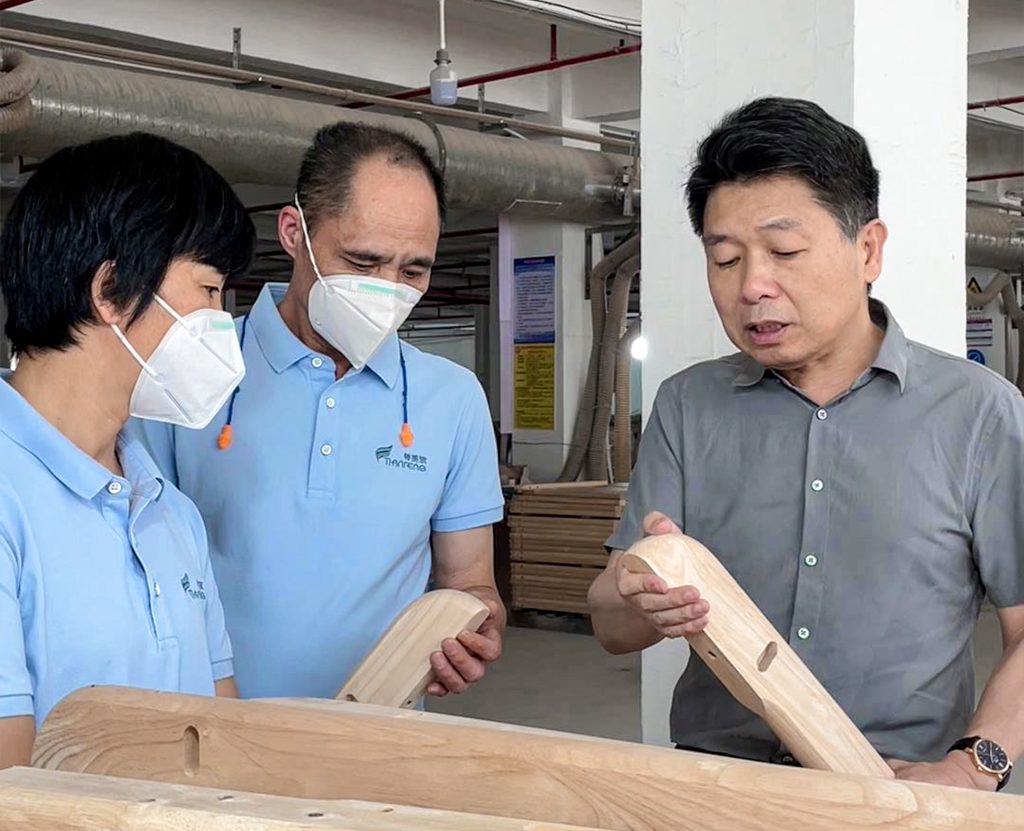
Request samples or detailed close-up photos of joints, seams, stitching, paint finish, and underside construction.
4. Assess Design and Customization Capability
A valuable long-term partner should be able to adapt a product to your market, brand position, and commercial requirements.
Ask whether the supplier supports OEM and ODM development rather than only selling existing models.
Confirm options for colors, fabrics, finishes, dimensions, packaging, logos, labels, and instruction manuals.
Understand the sample-development process, sample charges, revision rounds, and approval timeline.
Ask how approved samples and specifications are controlled during mass production.
Consider whether the factory can build coordinated collections, such as cribs, nursing chairs, changing tables, and children’s furniture.
5. Ask About MOQ, Lead Time, and Production Capacity
Reliable delivery depends on more than a quoted lead time—it depends on realistic capacity planning and transparent communication.
Confirm the MOQ for each model, color, fabric, finish, and packaging option.
Ask whether the factory supports sample orders, trial orders, or small-batch launches.
Clarify sample lead time, mass-production lead time, peak-season capacity, and order-cutoff requirements.
Discuss whether the supplier can arrange staged shipments to match your inventory plan or sales calendar.
Ask how material shortages, design changes, and production delays are communicated and managed.
6. Inspect the Quality Control Process
Do not only ask whether a factory has QC staff. Ask how quality is checked at each stage and what evidence is shared with buyers.
Review incoming-material inspection, in-process checks, and final inspection procedures.
Ask whether an AQL inspection standard or customer-specific inspection checklist can be used.
Confirm checks for dimensions, color, functions, assembly, appearance, accessories, and packaging before shipment.
Request inspection photos, videos, reports, or the option to appoint an independent third-party inspector.
Discuss the corrective-action process for defects and how recurring problems are prevented in later production.
7. Evaluate Packaging and Shipping Readiness
For export furniture, packaging is part of product quality. It protects the customer experience and reduces costly claims.
Ask whether the factory can perform or support drop tests, stacking tests, and transit-protection evaluations.
Confirm whether the packaging is designed for retail, e-commerce fulfillment, warehouse handling, or full-container shipping.
Check capabilities for barcodes, shipping marks, color boxes, inserts, manuals, spare hardware packs, and carton artwork.
Review carton dimensions, gross weight, container loading plans, and pallet requirements if relevant.
Confirm familiarity with your preferred Incoterms and shipping documentation, such as EXW, FOB, or DDP arrangements.
8. Look Beyond the Lowest Price
The lowest unit price is rarely the lowest total cost when product quality, compliance, delivery, and after-sales service are considered.
Compare quotations alongside material specifications, safety requirements, packaging standards, quality controls, and lead times.
Be cautious when a quote is significantly lower than comparable suppliers; understand which materials or service levels differ.
Evaluate responsiveness, technical communication, sampling discipline, and willingness to solve issues—not only price.
Choose a factory capable of providing stable quality and a clear corrective-action process over a long-term partnership.
Before Choosing a Supplier: Key Questions to Ask
Are you a direct nursery furniture manufacturer?
Which safety standards and testing requirements can you support for my market?
Can you provide recent test reports for relevant products or materials?
What materials and construction methods are used in this product?
What are the MOQ, sample timeline, and mass-production lead time?
How do you control quality before shipment?
Can you support OEM/ODM development and customized packaging?
How do you handle replacement parts, defects, or quality claims after shipment?
Choosing the Right Nursery Furniture Factory in China
Choosing a nursery furniture factory in China is not only about finding a competitive price. The right partner should combine proven manufacturing capability, reliable safety and quality controls, flexible customization, and clear communication. Taking time to evaluate these areas before placing an order helps build a more dependable supply chain and protects your brand in the long term.