Address
304 North Cardinal
St. Dorchester Center, MA 02124
Work Hours
Monday to Friday: 7AM - 7PM
Weekend: 10AM - 5PM
Address
304 North Cardinal
St. Dorchester Center, MA 02124
Work Hours
Monday to Friday: 7AM - 7PM
Weekend: 10AM - 5PM
Nursery furniture in 2026 is becoming more thoughtful, adaptable, and emotionally reassuring. Parents are no longer choosing a crib or nursing chair only because it looks attractive in a product photo. They are asking whether it will fit a smaller home, support the realities of early parenthood, last beyond one short stage, and align with the visual identity of the rest of the house.
For retailers, importers, and private-label brands, this shift creates a clear opportunity: build collections that combine calm design with practical features, credible safety specifications, and flexible customization. Below are the nursery furniture trends that are likely to shape buying decisions in 2026—and how to turn them into a commercially strong product range.
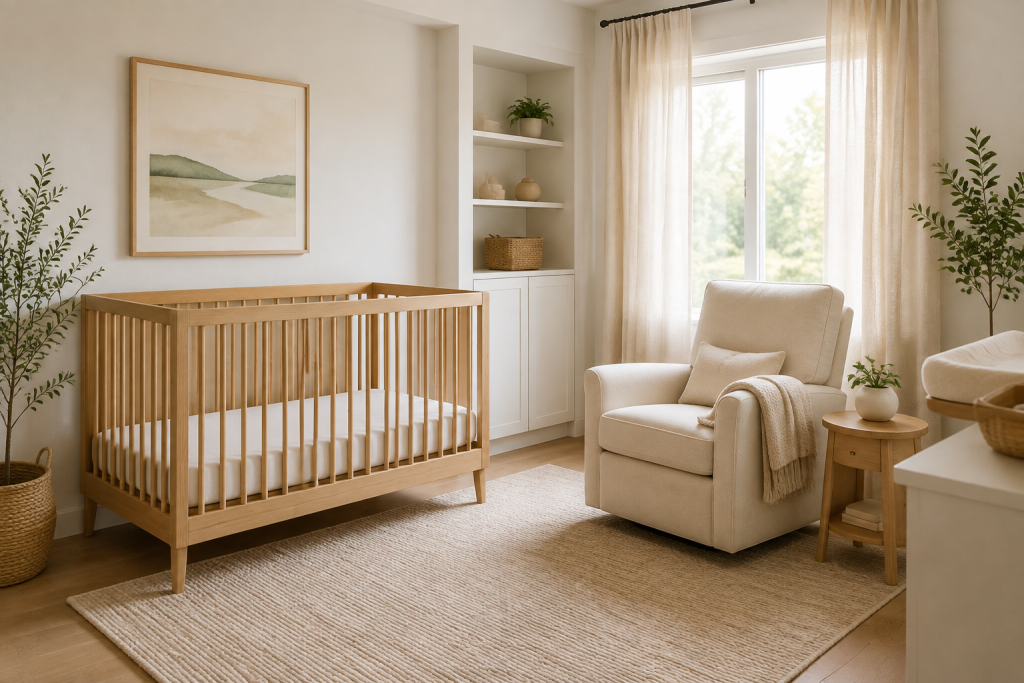
The nursery is increasingly treated as part of the home rather than a separate, highly themed room. Clean-lined furniture, warm neutrals, rounded details, and natural textures are replacing loud character graphics and overly matched sets. This style feels calm in photographs, adapts to many interior styles, and gives brands a longer design lifecycle.
For OEM/ODM projects, offer a disciplined finish palette rather than too many similar colors. A small group of well-tested finishes is easier to sample, easier to control in production, and more cohesive for a retailer’s catalog.
Families want furniture that earns its space. Convertible cribs that grow into toddler beds, changing tables with removable toppers, and nursery chairs that still belong in a living room after the newborn stage all answer that need. The trend is not simply “more functions”; it is useful longevity without making the product look complicated.
The strongest 2026 concepts will make the transition easy to understand. Clear conversion kits, compatible dimensions, replacement-part planning, and straightforward instructions matter as much as the initial design. A product that lasts longer can also help a retailer communicate value more confidently.
The nursery chair is moving from an optional accessory to a central piece of the parent’s daily routine. In 2026, buyers will continue to favor glider chairs, recliners, and rockers that look refined while solving real comfort problems: getting up with less effort, supporting the arms during feeding, and creating a quiet place to settle a baby.
For a manufacturer, this is a chance to differentiate through ergonomics, upholstery options, leg choices, and motion mechanisms—not only through color. Product pages should explain the benefit in plain language, not just list “glider” or “recliner” as a feature.
Parents and buyers are paying closer attention to what furniture is made from, particularly for products used close to a baby every day. Responsible material choices, controlled finishes, and clear documentation can turn compliance work into a sales advantage.
This does not mean every product needs to make broad environmental claims. It means brands should be precise and verifiable: identify the wood or board material, specify the finish system where appropriate, maintain test reports for the target market, and avoid vague “eco-friendly” language that cannot be supported.
For export collections, build a document pack early: bill of materials, finish specifications, packaging details, test records, assembly instructions, and care guidance. Retailers often need this information long before the purchase order is finalized.
Urban homes, apartments, and shared bedrooms continue to influence nursery planning. Buyers are looking for pieces that feel substantial and safe without dominating the room. Slim-profile changing tables, compact cribs, flexible storage, nesting side tables, and chairs with a manageable footprint are especially relevant.
The key is to design for compact living without sacrificing usability. Measure the actual clearance needed for drawers, reclining functions, and parents walking around the furniture. Then show these dimensions clearly in catalogs, on product pages, and in line drawings. Good dimensional communication reduces surprises and supports online conversion.
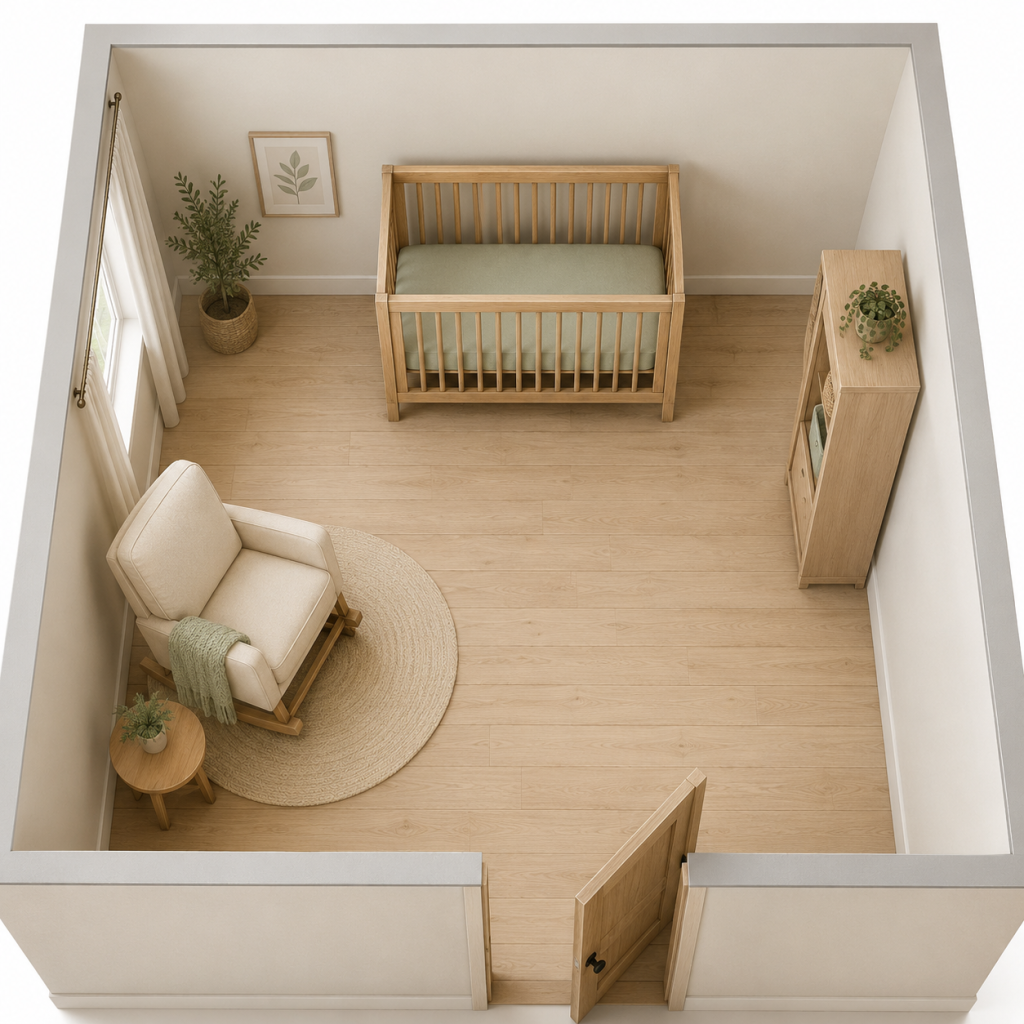
Soft visual language is expanding across the entire nursery collection. Rounded edges, curved handles, smooth corner transitions, and tactile upholstery create a friendlier feel while also supporting safer everyday use. This direction works especially well when a brand wants a premium yet approachable look.
The important balance is between softness and structure. Furniture should look gentle, but it still needs solid construction, stable geometry, durable hardware, and packaging that protects the finish through transport. A beautiful curve only works commercially when it can be produced consistently at scale.
Instead of buying one fully matched nursery set, many customers prefer to combine compatible pieces. A natural-wood crib may sit beside an upholstered cream glider and a painted storage cabinet. This gives retailers more flexibility in merchandising and allows a brand to offer personalization without creating an unmanageable number of SKUs.
A practical approach is to create a shared design language: repeated leg profiles, compatible hardware colors, a controlled neutral palette, and a few accent finishes. Let each piece work alone, but make it easy for customers to imagine the complete room.
Customization remains important in B2B nursery furniture, but the most successful programs will be structured rather than unlimited. Buyers may want their own fabric, a new finish, branded packaging, or small design adjustments. Manufacturers that can clearly separate standard options from development options will move projects faster and protect production quality.
Clear boundaries make customization easier for the buyer—not less flexible. They also help the supplier quote accurately and keep the final product consistent with the approved sample.
The best assortment is not the one with the most products. It is the one in which every item has a clear role. A balanced 2026 collection could include a convertible crib as the anchor, a compact changing and storage solution, a comfortable glider or recliner, and selected accent pieces that share the same finishes and proportions.
Before selecting a supplier, buyers should ask practical questions: Can the supplier provide market-appropriate testing support? Are key materials and mechanisms consistent? Can they produce private-label packaging? Can product dimensions and carton details be supplied early? Can the collection be expanded later without redesigning everything from zero?
The nursery furniture trends for 2026 point in one direction: products must feel calmer, work harder, and communicate their value more clearly. Soft minimalism, adaptable design, parent-centered seating, transparent materials, and disciplined customization are not separate trends—they are parts of a more thoughtful buying standard.
At Tianfeng Baby, we work with brands and buyers to develop nursery and kids furniture that balances contemporary design with practical manufacturing. Whether you are sourcing a ready-to-order product or building an OEM/ODM collection, our team can support sampling, customization, packaging, and export-focused production planning.
Call to action: Explore our Nursery Furniture collection, learn more about OEM & ODM services, or contact us to discuss your next product program.